
Picture yourself standing knee-deep in a crystal-clear mountain stream. The sun filters through the trees, casting a soft glow on the water. Suddenly, a flash of silver and crimson catches your eye as a fish leaps gracefully above the surface.
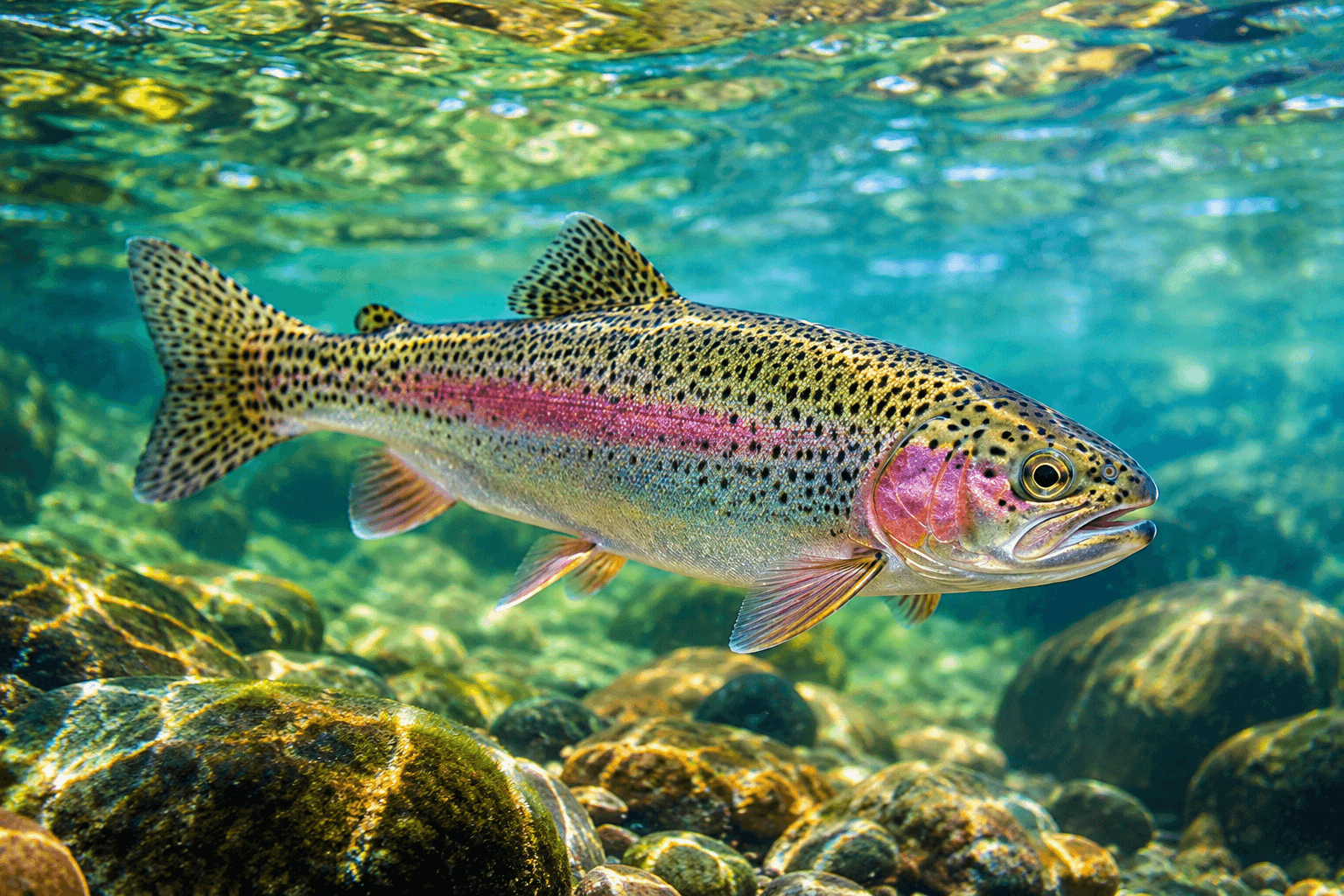
That radiant splash of pink and pinkish-red is the unmistakable mark of the rainbow trout—one of North America’s most iconically beautiful and thrilling freshwater fish.
Whether you are a passionate angler preparing for your next fishing adventure, a wildlife enthusiast, or simply curious about freshwater ecosystems, rainbow trout hold a special spot in the aquatic world.
What makes them so active? Where do they hide? What do they eat? And are rainbow trout and steelhead really the same fish? Let’s dive in and explore everything you need to know.
What Is a Rainbow Trout?
Scientifically known as Oncorhynchus mykiss, the rainbow trout belongs to the Salmonidae family—a prestigious aquatic family that includes salmon, chars, and other trout species.
Rainbow trout are cold-water creatures that thrive in clean, oxygen-rich waters. While many spend their entire lives moving through freshwater streams and cold lakes, some populations take an epic journey to the ocean and return to spawn. These ocean-going travelers are known as steelhead.
Because of their immense popularity among recreational fishers, rainbow trout are also widely raised in hatcheries and stocked into lakes and rivers around the globe.
[Visual Placeholder: Insert a high-resolution photo showing a vivid Rainbow Trout being gently held in clear stream water]
How to Spot a Rainbow Trout: Easy Identification Tips
Spotting a rainbow trout in the wild or on the end of your line isn’t hard once you know what to look for. Their striking colors act like a vibrant signature.
Key features to look out for:
- The Crimson Stripe: A signature pinkish-to-magenta band stretching along the lateral line of its body.
- Dark Freckling: Distinct black spots peppered across its back, sides, and tail fins.
- Streamlined Body: A slender, athletic shape built to cut through fast currents.
- Light Belly: A silvery or white underside that blends in when viewed from below.
Note: Wild trout often display much richer, darker tones compared to lighter, hatchery-raised trout.
Habitat: Where Do Rainbow Trout Live?
Rainbow trout are nature’s cold-water lovers. They require cool, well-oxygenated water to survive and can be found in various aquatic environments, including:
- Alpine mountain streams
- Fast-flowing rivers
- Deep, clear cold lakes
- Oxygen-rich riffles and deep river pools
In river systems, adults often hang out in deep, shaded pools where they can rest, while younger trout prefer shallower, slower water tucked near rocks, submerged logs, and vegetation for safety.
Although native to the rivers and coastal streams of western North America, rainbow trout have been introduced worldwide due to their popularity in sport fishing.
The Sweet Spot: Water Temperature Preferences
Water temperature dictates almost every aspect of a trout’s life. If water gets too warm, their oxygen levels drop, causing severe stress.
- Stream Populations: Prefer temperatures around 54°F to 66°F (12°C to 19°C).
- Lake Populations: Choose cooler, deeper waters around 45°F to 64°F (7°C to 18°C).
This strictly cold requirement is why you’ll almost always find rainbow trout in high-altitude streams or deep, spring-fed lakes.
What Do Rainbow Trout Eat?
Rainbow trout are opportunistic feeders—they aren’t picky eaters and will happily snap up whatever protein-rich prey drifts their way.
Their diverse diet includes:
- Aquatic Insects: Mayflies, caddisflies, and stoneflies (both adults and larvae).
- Terrestrial Insects: Grasshoppers, ants, and beetles that fall into the water.
- Crustaceans & Worms: Crayfish, freshwater shrimp, and nightcrawlers.
- Smaller Fish & Eggs: As trout grow larger, they hunt small minnows and feed on fish eggs.
Young trout start small by feeding on microscopic zooplankton and tiny insect larvae, transitioning to bigger prey as they mature.
How Big Do They Get?
Size varies wildly depending on habitat, age, food availability, and whether the fish lives entirely in freshwater or ventures out to sea.
- Stream Trout: Generally range between 9 to 14 inches.
- Lake-Dwelling Trout: Richer food supplies allow four-year-old lake trout to grow 13 to 17 inches or more.
- Steelhead: Ocean feeding grounds allow migratory steelhead to easily reach 18 to 24 inches, with trophy fish growing even larger!
The Rainbow Trout Life Cycle
A rainbow trout’s life journey is a story of survival and instinct:
- Spawning: In spring (typically March through May), females use their tails to clean away sediment and build gravel nests called redds in well-oxygenated stream riffles.
- Egg Hatching: Females deposit eggs, which are fertilized by males. Depending on water temperature, eggs hatch in 28 to 49 days.
- Growth: Fry remain sheltered near calm shorelines before moving out into stronger currents as they gain strength.
- Lifespan: Stream trout typically live 3 to 5 years, while lake populations and migratory steelhead can live significantly longer.
Are Rainbow Trout and Steelhead the Same Fish?
Yes! Scientifically, both are Oncorhynchus mykiss. The difference lies entirely in their lifestyle strategy:
- Rainbow Trout: Stay in freshwater lakes and rivers for their entire lives.
- Steelhead: Are anadromous. They hatch in freshwater, migrate to the ocean to feed and grow huge, and then return to their home freshwater streams to spawn.
Fun Fact: Outwardly, a silver ocean-returning steelhead can look quite different from a vivid stream trout. Biologists often examine fish scales or ear bones (otoliths) under a microscope to confirm a fish’s ocean history!
Quick Comparison: Rainbow Trout vs. Brown Trout
Anglers often catch these two species in the same cold streams. Here is how to tell them apart:
| Feature | Rainbow Trout | Brown Trout |
| Primary Mark | Vibrant pink/red side band | Golden/brownish body hue |
| Spotting | Small dark spots across body & tail | Dark spots surrounded by pale halos + red spots |
| Habitats | Cold, fast streams and clear lakes | Cool rivers, undercut banks, and lakes |
| Scientific Name | Oncorhynchus mykiss | Salmo trutta |
How to Catch Rainbow Trout: Angler’s Quick Guide
Catching a rainbow trout is an exhilarating challenge because they are strong swimmers and quick acrobats.
Popular Techniques:
- Fly Fishing: Matching artificial flies to local insect hatches (nymphs, dry flies, or streamers).
- Spin Fishing: Using small inline spinners, spoons, or micro-jigs.
- Bait Fishing: Presenting natural options like worms or salmon eggs near current seams.
Where to Cast:
Look for current breaks behind large boulders, deep undercut banks, deep river pools, and the foamy water at the tail end of fast riffles where insects get washed downstream.
Wild vs. Stocked Rainbow Trout
Not all trout in the river were born there!
- Wild Trout: Born naturally in the stream. They tend to have brighter colors, pristine fins, and sharper instincts.
- Stocked Trout: Raised in hatcheries and released to enhance recreational fishing opportunities. They often have duller coloration and slightly worn fins from hatchery pools.
Fisheries managers carefully balance stocking programs to protect wild trout genetics while providing fun fishing experiences for families and anglers.
Final Thoughts
From their shimmering colors to their incredible life cycle, rainbow trout are truly a masterpiece of cold-water nature. Understanding where they live, how they feed, and how to protect their pristine habitats ensures these amazing fish will continue to thrive for generations to come.
We’d Love to Hear From You!
Have you ever caught a wild rainbow trout or spotted one in an alpine stream? What’s your favorite lures or fly-fishing spot? Share your stories and thoughts in the comments below!

3 Comments
Pingback: Easy Baked Rainbow Trout (Ready in 20 Minutes) - Fish Accessories
Pingback: How to Catch Rainbow Trout in Stardew Valley (ID & Pond Guide)
Pingback: How to Catch a Golden Rainbow Trout: Ultimate Angler’s Guide