

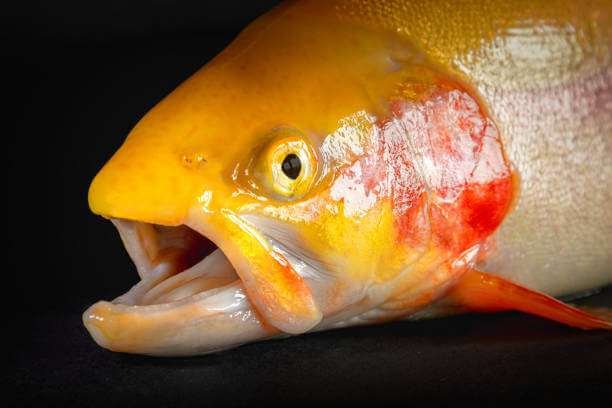
A golden rainbow trout is one of the most eye-catching fish you can ever hook into. Its vibrant yellow-gold body and glowing pink stripe instantly set it apart from standard trout.
Despite its striking appearance, the golden rainbow trout is not a separate species. It is a unique color variant of the standard rainbow trout, known scientifically as Oncorhynchus mykiss.
So, what makes this trout golden? Where can you find one? How big do they get? And is it the same as the California golden trout? Let’s dive in and explore everything you need to know.
What Is a Golden Rainbow Trout?
A golden rainbow trout is a specially bred color variant of the rainbow trout. The strain was originally developed through selective breeding after hatchery workers discovered an unusually golden female rainbow trout at a West Virginia hatchery back in the 1950s.
Unlike a typical rainbow trout—which features a darker olive back and a muted rainbow stripe—the golden rainbow boasts a brilliant yellow-gold body highlighted by vivid pink or reddish markings along its lateral line.
Depending on where you fish, you might also hear anglers refer to this fish as:
- Palomino Trout
- Golden Trout
- Centennial Trout
(Note: Regional names can vary, but they all refer to this same distinctive strain.)
Why Is the Golden Rainbow Trout Gold?
The striking gold coloration is caused by a unique genetic pigmentation mutation.
Contrary to popular belief, golden rainbow trout are not albino. They carry normal dark pigmentation in their eyes and retain localized pink/red pigment along their sides, gills, and fins.
![Image Suggestion: Clear close-up of a bright Golden Rainbow Trout held near water, showing its distinct golden body and pink stripe]
Because of their bright bodies, these fish stand out dramatically in clear streams. You will often spot a golden rainbow lurking in a pool long before you even make your first cast!
Golden Rainbow Trout vs. California Golden Trout
Because of their names, anglers frequently confuse these two fish, but they are entirely different species:
- Golden Rainbow Trout (Oncorhynchus mykiss): A color variant of the standard rainbow trout, developed in hatcheries and widely stocked in eastern and midwestern waters.
- California Golden Trout (Oncorhynchus mykiss aguabonita): A distinct, naturally occurring sub-species native to high-elevation streams in California’s Sierra Nevada mountains.
If you hook a bright golden fish east of the Rockies, you are almost certainly looking at a golden rainbow trout rather than a native California golden.
What Does a Golden Rainbow Trout Look Like?
Identifying a golden rainbow trout is straightforward thanks to its unique color scheme.
Key physical features include:
- A bright yellow, canary, or deep golden body
- A pronounced pink or reddish lateral stripe
- Subtle reddish highlights on the gill covers (operculum) and lower fins
- A creamy or pale underside
- The classic, streamlined body shape of a rainbow trout
Individual coloration can vary slightly based on water clarity, diet, age, and whether the fish was freshly stocked or has lived in the wild for several seasons.
Where Do Golden Rainbow Trout Live?
Golden rainbow trout require the exact same habitat as traditional rainbow trout. They thrive in cold, clean, highly oxygenated freshwater environments, including:
- High-gradient mountain streams
- Freestone rivers
- Stocked lakes and ponds
West Virginia remains the world center for golden rainbow trout due to its historical roots there. However, fish hatcheries across several states now rear and stock them regularly.
What Do Golden Rainbow Trout Eat?
The dietary habits of a golden rainbow trout match those of standard rainbow trout. Their opportunistic diet includes:
- Aquatic insects (mayflies, caddisflies, stoneflies, and midges)
- Terrestrial insects (grasshoppers, ants, and beetles)
- Small baitfish and sculpins
- Crustaceans and crayfish
While younger trout focus heavily on small insect larvae, larger individuals transition to feeding on smaller fish and larger aquatic creatures.
How Big Do Golden Rainbow Trout Get?
Golden rainbow trout grow at rates similar to standard rainbow trout, heavily influenced by food availability, habitat quality, and hatchery feed.
While most stocked fish landed by anglers weigh between 1 to 3 pounds, trophy-sized specimens can grow significantly larger under ideal conditions. State records in regions like West Virginia have topped 11 pounds and measured over 28 inches in length!
How Do You Catch a Golden Rainbow Trout?
Catching a golden rainbow requires tactics similar to standard trout fishing, but with one critical tactical twist: stealth.
Because these fish are bright yellow, they are easy for you to see—which also means they attract heavy fishing pressure from every angler on the bank. As a result, golden rainbows can become extremely spooky and line-shy.
![Image Suggestion: Angler quietly casting a fly rod near a shallow river pool]
1. Light Lures & Spinners
Small inline spinners (like Mepps or Panther Martins), spoons, and small swimbaits work exceptionally well in moving water. Cast upstream and let the lure drift naturally into deep pools.
2. Fly Fishing
When trout are rising or keying in on hatches, fly fishing is dead effective. Nymphing with bead-head patterns (like a Pheasant Tail or Hare’s Ear) or floating dry flies on fine tippet (5X or 6X) will yield great results.
3. Natural Baits
In waters where natural bait is permitted, drift live worms, salmon eggs, or trout dough bait along the riverbed using light lead weights.
The West Virginia “Gold Rush”
One of the most famous events surrounding this fish is the annual West Virginia Gold Rush.
During this event, the state stocks thousands of golden rainbow trout across dozens of designated state parks, lakes, and streams. It attracts thousands of families and seasoned anglers hoping to land a golden trophy and win tagged-fish prizes.
Frequently Asked Questions (FAQ)
Q: Is a golden rainbow trout a real fish?
Yes! It is an authentic genetic color variant of the standard rainbow trout (Oncorhynchus mykiss).
Q: Is a golden rainbow trout albino?
No. Albino fish lack all pigment and have pink eyes. Golden rainbow trout retain dark eyes and pinkish lateral pigmentation.
Q: Can you eat golden rainbow trout?
Yes. Their flesh and flavor are identical to regular rainbow trout. Just be sure to check local harvest regulations, size limits, and possession rules before keeping one.
Final Thoughts
The golden rainbow trout is one of the most thrilling and visual catches in freshwater angling. From its fascinating hatchery origin in West Virginia to its striking appearance in a clear stream, landing one is always a highlight of any fishing trip.
Next time you spot a flash of gold resting in a pool, stay low, make a quiet presentation, and enjoy the thrill of hooking one of nature’s most vivid gamefish!
