
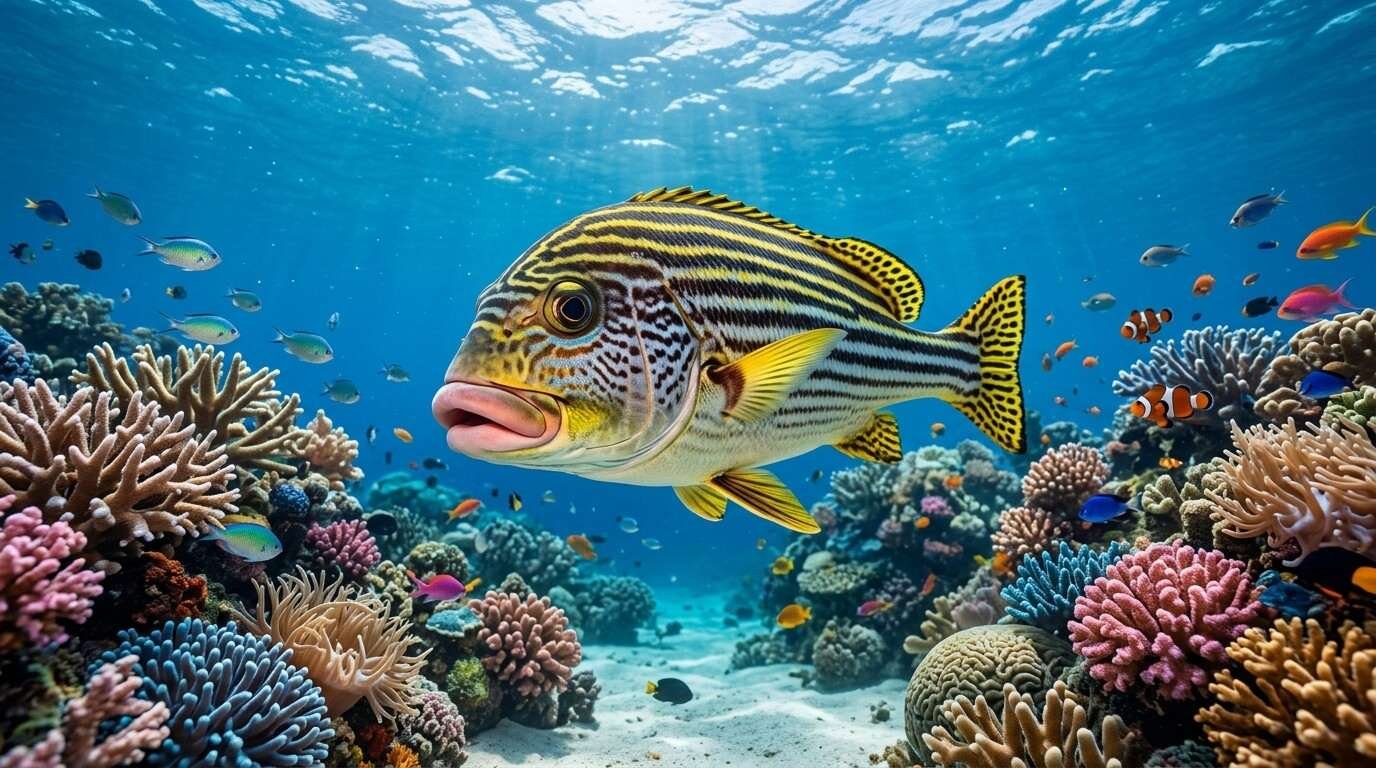
When exploring underwater life, fish display an incredible variety of shapes, colors, and behaviors. However, few physical features catch the eye quite like unusually large, fleshy, or prominent lips.
Far from being just a cosmetic quirk, a fish’s lip structure plays a critical role in its survival—helping it search for food in dark substrates, scrape algae off sharp rocks, suction onto heavy currents, or capture elusive prey.
Whether you are a seasoned aquarium hobbyist looking for your next centerpiece fish or simply curious about marine life, here is a comprehensive guide to 20 fascinating fish with big lips, along with their unique care needs and biological adaptations.
Why Do Some Fish Have Big Lips? The Science of Aquatic Mouths
Before diving into specific species, it helps to understand why these mouth structures exist. Big lips in fish are typically specialized evolutionary tools that serve several purposes:
- Substrate Foraging: Downward-facing, fleshy lips packed with taste buds help fish detect edible organisms buried under sand, mud, or gravel.
- Suction & Attachment: Specialized suction-cup mouths allow fish to anchor themselves to rocks in fast-moving rivers without being washed away.
- Algae Scraping: Thick lips shield the jaw bone and assist in scraping micro-algae or coral polyps off jagged surfaces.
- Ambush Feeding: Broad, flexible lips create an explosive vacuum suction, pulling prey inside in milliseconds.
20 Remarkable Big-Lipped Fish Species
1. Kissing Gourami (Helostoma temminckii)
- Habitat: Freshwater (Southeast Asia)
- Care Level: Intermediate | Adult Size: 10–12 inches | Tank Size: 55+ gallons
Famous for their distinct “kissing” behavior, these fish lock lips with one another. Contrary to popular belief, this isn’t affection—it’s a ritualized display of dominance between males testing each other’s strength. Their thick, flexible lips are lined with tiny, delicate teeth used to scrape algae and micro-organisms from aquarium glass, plants, and rocks.
2. Sweetlips (Plectorhinchus spp.)
- Habitat: Saltwater (Indo-Pacific Coral Reefs)
- Care Level: Advanced | Adult Size: 20–35 inches | Tank Size: 180+ gallons
Named directly for their oversized, brightly colored, and pillowy lips, Sweetlips are stunning reef dwellers. As juveniles, they dance wildly to mimic toxic flatworms, but as adults, they grow into large, peaceful carnivores that use their sensitive lips to hunt crabs, shrimp, and worms along the ocean floor at night.
3. Humphead Wrasse (Cheilinus undulatus)
- Habitat: Saltwater (Indo-Pacific Coral Reefs)
- Care Level: Public Aquariums Only | Adult Size: Up to 6 feet | Tank Size: Thousands of gallons
Also known as the Napoleon Wrasse, this giant ocean dweller features massive, rubbery lips and a prominent forehead bump. Their powerful jaws and thick lips allow them to crush hard-shelled prey that other fish can’t eat, including sea urchins, toxic crown-of-thorns starfish, and crabs.
4. Common Pleco (Hypostomus plecostomus)
- Habitat: Freshwater (South America)
- Care Level: Easy | Adult Size: 15–24 inches | Tank Size: 75–125+ gallons
The Pleco features a specialized ventral suction-cup mouth surrounded by thick, fleshy pads. This unique structure lets the fish cling securely to submerged logs or rocks in swift currents while using its rasping mouthparts to feed on algae and biofilm continuously.
5. Flowerhorn Cichlid (Hybrid)
- Habitat: Freshwater (Aquarium Hybrid)
- Care Level: Moderate | Adult Size: 12–16 inches | Tank Size: 75+ gallons
Man-made through selective cichlid breeding, Flowerhorns are famous for their vibrant colors, large head nuchal humps (Kok), and thick, pronounced lips. They are aggressive, highly intelligent, and often interact with their owners through the glass during feeding time.
6. Oscar Fish (Astronotus ocellatus)
- Habitat: Freshwater (Amazon Basin)
- Care Level: Easy-Intermediate | Adult Size: 12–14 inches | Tank Size: 75+ gallons
Oscars are beloved for their dog-like personalities and expressive faces. They possess large, flexible mouths with prominent lips that allow them to rearrange gravel, move tank decorations, and swallow a wide diet ranging from pellets to small invertebrates.
7. Giant Gourami (Osphronemus goramy)
- Habitat: Freshwater (Southeast Asia)
- Care Level: Intermediate | Adult Size: 20–24 inches | Tank Size: 150+ gallons
As Giant Gouramis mature, their facial features undergo a dramatic change. They develop a heavy forehead bump and broad, swollen-looking lips. These omnivorous giants use their strong mouthparts to consume large quantities of vegetables, fruits, and floating vegetation.
8. Koi (Cyprinus rubrofuscus)
- Habitat: Freshwater Ponds
- Care Level: Easy | Adult Size: 24–36 inches | Pond Size: 1,000+ gallons
Koi possess downward-oriented, highly extensible mouths encircled by sensitive, fleshy lips and barbels (whisker-like organs). This mouth design enables them to vacuum up food from pond bottoms while sifting out inedible dirt and debris.
9. Red Devil Cichlid (Amphilophus labiatus)
- Habitat: Freshwater (Central America / Lakes of Nicaragua)
- Care Level: Intermediate | Adult Size: 12–15 inches | Tank Size: 75+ gallons
In the wild, many Red Devil Cichlids develop extraordinarily swollen, thick lips due to constantly picking prey out of jagged volcanic rock crevices. While lip size can diminish slightly in captivity with pellet feeding, their territorial and feisty nature remains unchanged.
10. Midas Cichlid (Amphilophus citrinellus)
- Habitat: Freshwater (Central America)
- Care Level: Intermediate | Adult Size: 10–14 inches | Tank Size: 75+ gallons
Closely related to the Red Devil, the Midas Cichlid sports a bulky body, prominent cranial bump, and deep, fleshy lips. They use their strong jaws and mouth structure to dig extensive pits in gravel during breeding season.
11. Big-Lip Damselfish (Cheiloprion labiatus)
- Habitat: Saltwater (Western Pacific Reefs)
- Care Level: Intermediate | Adult Size: 3–4 inches | Tank Size: 30+ gallons
Unlike many larger species on this list, this small marine fish is notable for having oversized, curly lips relative to its body. It lives among branching Acropora corals and uses its soft lips to feed gently on live coral polyps without damaging the underlying skeleton.
12. Grouper (Epinephelinae Family)
- Habitat: Saltwater (Oceanic Reefs & Deep Waters)
- Care Level: Advanced | Adult Size: 1.5 to 8+ feet | Tank Size: Large Public Aquariums
Groupers feature wide heads with oversized, fleshy lips and powerful jaws. They are classic ambush predators. When a Grouper opens its massive mouth rapidly, it creates a powerful negative pressure vacuum that pulls nearby fish and crustaceans straight down its throat.
13. Triggerfish (Balistidae Family)
- Habitat: Saltwater (Tropical Reefs)
- Care Level: Intermediate-Advanced | Adult Size: 10–20 inches | Tank Size: 100–200+ gallons
Triggerfish possess small but incredibly strong mouths enclosed by thick, protective skin and lips. Inside are chisel-like teeth capable of crushing heavy sea urchin spines, crab shells, and hard coral.
14. Pacu (Colossoma macropomum)
- Habitat: Freshwater (South America)
- Care Level: Advanced | Adult Size: Up to 3 feet | Tank Size: 500+ gallons
A vegetarian cousin of the piranha, the Pacu has broad lips concealing human-like, square teeth. Their heavy jaws and broad mouth structure are specially adapted for crushing tough nuts and fruits that fall from trees into Amazonian flooded forests.
15. Parrotfish (Scaridae Family)
- Habitat: Saltwater (Tropical Reefs)
- Care Level: Experts / Not Recommended | Adult Size: 12–30 inches | Tank Size: Custom Reef Systems
Parrotfish have thick lips surrounding teeth fused into a parrot-like beak. They spend their days biting off chunks of dead coral and scraping rock surfaces for algae, grinding down stone and excreting fine white sand that forms ocean beaches.
16. Common Carp (Cyprinus carpio)
- Habitat: Freshwater (Lakes & Rivers Worldwide)
- Care Level: Pond / Wild | Adult Size: 15–40 inches | Pond/Lake Native
The wild ancestor of domesticated Koi, the Common Carp features thick, rubbery lips that protrude outward like a short hose. This mouth adaptation acts like a dredge, vacuuming micro-invertebrates out of dense river mud.
17. Red Snapper (Lutjanus campechanus)
- Habitat: Saltwater (Atlantic Ocean & Gulf of Mexico)
- Care Level: Wild Marine Species | Adult Size: 20–35 inches | N/A
Red Snapper carry a sharp, predatory mouth profile with distinct lips. As active opportunistic hunters, they rely on their wide gape to snatch fish, squid, and swimming crustaceans along offshore reefs.
18. Piranha (Serrasalmidae Family)
- Habitat: Freshwater (South American River Systems)
- Care Level: Intermediate | Adult Size: 8–14 inches | Tank Size: 75+ gallons
While Piranhas are famous for their razor-sharp triangular teeth, their lips play an important role by covering their dental structure when relaxed, protecting their gums while allowing for powerful bite pressure when feeding.
19. Stonefish (Synanceia spp.)
- Habitat: Saltwater (Indo-Pacific Shallow Waters)
- Care Level: Venomous Specialist | Adult Size: 10–14 inches | Tank Size: Specialist Species Only
Masters of camouflage, Stonefish lie completely motionless on the seafloor. Their upward-turned mouth is framed by heavy, fleshy lips. When an unsuspecting fish swims overhead, the Stonefish opens its massive mouth instantly, swallowing prey whole in less than 0.01 seconds.
20. Arapaima (Arapaima gigas)
- Habitat: Freshwater (Amazon River)
- Care Level: Public Aquariums Only | Adult Size: Up to 8–10 feet | Tank Size: Monstrous Basins
One of the largest freshwater fish on Earth, the Arapaima has a massive, upturned lower jaw with wide, muscular lips. It surfaces regularly to gulp air with its lung-like swim bladder and uses its massive gape to engulf large fish at the river’s surface.
Important Aquarium Considerations Before Buying
If you are planning to add a big-lipped fish to your home tank, keep these critical factors in mind:
- Beware of Growth Spurt: Many species with prominent lips (such as Giant Gouramis, Plecos, and Pacus) are sold as small juveniles but quickly outgrow standard home aquariums. Always research their maximum adult size.
- Aggressiveness & Territory: Large-mouthed fish like Red Devil Cichlids and Flowerhorns can be highly aggressive. Ensure tank mates are compatible in size and temperament.
- Dietary Needs: Thick-lipped fish often require specific diets—some need rough vegetation to scrape, while others require hard-shelled invertebrates to wear down their teeth naturally.
Healthy Lips vs. Lip Swelling (Disease Alert)
While thick lips are completely natural for the 20 species listed above, sudden lip enlargement in a fish that usually has small lips is a sign of illness.
| Feature | Natural Big Lips | Disease / Swollen Lips |
| Onset | Present from birth / develops gradually with growth | Appears suddenly over a few days |
| Texture | Smooth, uniform in skin tone and symmetry | Red, inflamed, ulcerated, or fuzzy (fungal growth) |
| Behavior | Normal feeding and swimming activity | Lethargy, refusal to eat, rubbing against rocks |
| Common Cause | Genetics & Evolutionary Adaptation | Bacterial infections (“Mouth Rot”), injuries, or poor water quality |
If you notice abnormal swelling, check your water quality immediately (Ammonia, Nitrite, and pH levels) and treat with appropriate aquatic antibacterial or antifungal medications if necessary.
Frequently Asked Questions (FAQ)
What is the purpose of big lips on fish?
Big lips serve several evolutionary advantages, including suction anchoring in fast water, scraping algae from rocks, sensing food buried in sand, and creating suction forces to swallow prey whole.
Which fish has the largest lips relative to its body?
The Sweetlips (Plectorhinchus) and the Big-Lip Damselfish (Cheiloprion labiatus) feature some of the largest, most visually exaggerated lips relative to their total body size.
Why do Kissing Gouramis kiss?
Kissing Gouramis do not “kiss” out of affection. The locking of lips is a ritualized test of strength between fish to establish territorial hierarchy without causing fatal injuries.
Final Thoughts
From the peaceful glass-cleaning Pleco in a home aquarium to the massive Humphead Wrasse patrolling ocean reefs, big lips are one of nature’s most effective tools for underwater survival. Understanding the purpose behind these mouth structures allows fish keepers and nature enthusiasts to appreciate their care requirements and behavior even more.
