

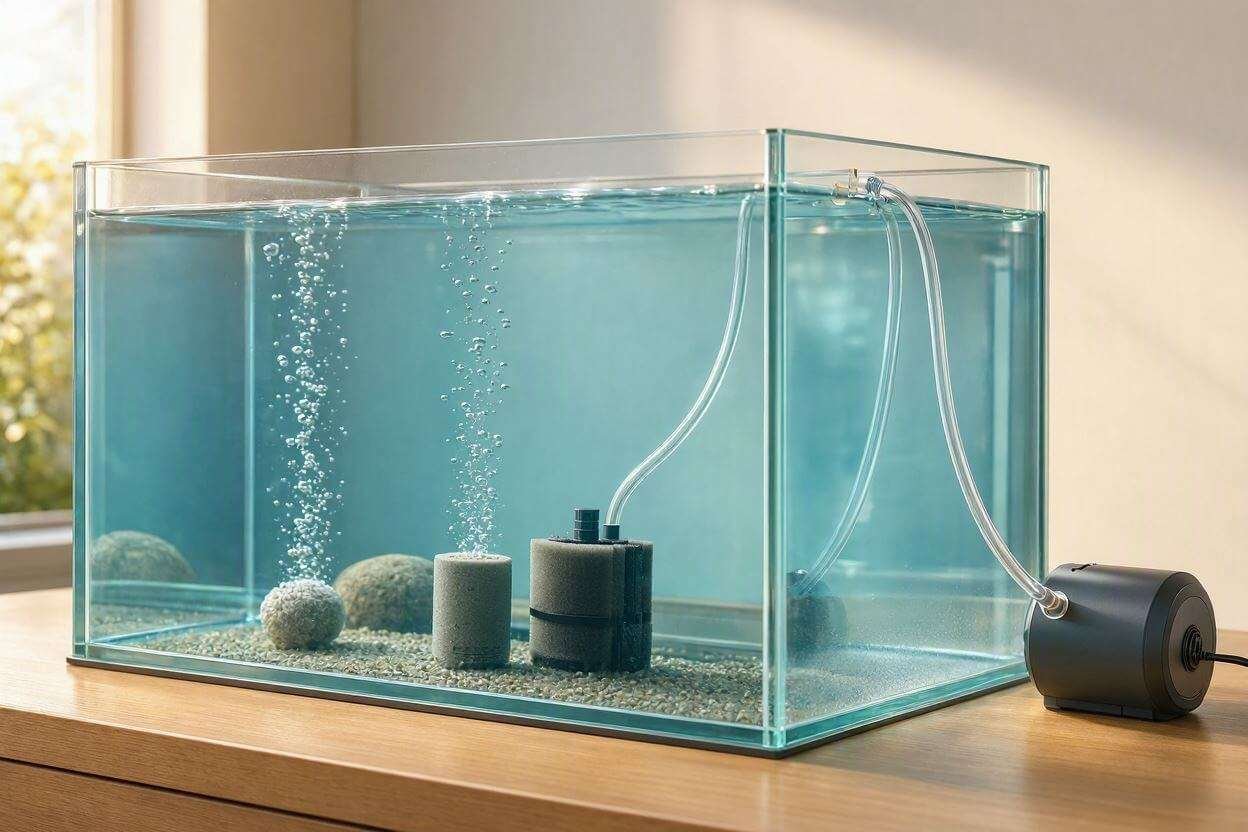
Aquarium Air Pumps: The Complete Practical Guide for Fish Keepers
An aquarium air pump is a small but mighty piece of equipment. If you’ve ever stood in a pet store or scrolled online, you’ve likely seen hundreds of setups with gentle columns of bubbles rising through the water. But beyond looking pretty, what does an air pump actually do—and does your tank really need one?
In this guide, we’ll dive into how air pumps work, how to size one correctly, step-by-step setup instructions, quiet-running tips, and real-world recommendations.
What Is an Aquarium Air Pump?
An aquarium air pump sits outside your tank and pushes atmospheric air into the water using flexible airline tubing.
Once the air passes through the tubing, it powers devices inside your tank such as:
- Air Stones: To break air into fine, tiny bubbles.
- Sponge Filters: Popular for shrimp, fry, and quarantine tanks.
- Bubble Wands & Ornaments: For decorative water movements.
- Undergravel Filters: Traditional biological filtration systems.
Does Every Aquarium Need One?
No. If you run a filter (like a Hang-On-Back or Canister filter) that already ripples the water’s surface, you likely have plenty of oxygen. However, an air pump is essential if:
- You are running a sponge filter.
- Your water surface is stagnant or still.
- You keep high-oxygen-demanding fish (like Cichlids or Goldfish).
- You live in an area prone to power outages and need battery backup.
How Air Pumps Work: The Oxygenation Myth
A common misconception among beginners is that the bubbles themselves dissolve directly into the water to add oxygen.
In reality, oxygen enters the water through surface agitation. When bubbles rise and break at the surface, they disturb the top layer of water. This creates gas exchange: Oxygen enters, and Carbon Dioxide (CO2) escapes.
Types of Aquarium Air Pumps
Choosing the right style depends on how many tanks or accessories you plan to run.
- Single-Outlet Pumps: Great for small setups (up to 20 gallons) running a single air stone or sponge filter (e.g., Tetra Whisper 10).
- Dual-Outlet Pumps: Feature two separate ports so you can run two sponge filters or an air stone + sponge filter simultaneously (e.g., Fluval Q2).
- Adjustable Flow Pumps: Include a dial to control airflow. Essential if you keep fish that dislike strong currents, like Bettas (e.g., Hygger Quiet Air Pump).
- Battery & USB Pumps: Emergency backup pumps powered by rechargeable lithium batteries or AA batteries. They turn on automatically during power outages to keep fish alive.
- Multi-Outlet / Commercial Pumps: Heavy-duty piston pumps designed for multi-tank fish rooms or deep tanks over 100 gallons.
How to Choose the Right Size (Sizing Guide)
Choosing an air pump isn’t just about gallons—tank depth matters. Water pressure (head pressure) increases the deeper your tank is, forcing the pump to work harder.
| Tank Size | Recommended Flow Rate | Typical Setup | Popular Example |
| 5–15 Gallons | 0.5–1.0 LPM | 1 Small Air Stone or Sponge Filter | Tetra Whisper 10 |
| 20–40 Gallons | 1.5–2.5 LPM | Medium Sponge Filter or Air Wand | Fluval Q1 / Hygger HG-946 |
| 55–75 Gallons | 3.0–5.0 LPM | Dual Sponge Filters or Deep Tank Setup | Fluval Q2 |
| 75+ Gallons / Fish Room | 5.0+ LPM or Multi-Outlet | Multiple air devices across large volume | SunSun / Aquatop Commercial |
Note: LPM = Liters Per Minute.
Essential Accessories You Can’t Skip
When setting up an air pump, you need more than just the pump itself:
- Standard Airline Tubing (3/16 inch): Silicone tubing is softer and lasts longer than stiff PVC tubing.
- Check Valve (Must-Have!): A small plastic valve that allows air to flow forward but stops water from siphoning back into the pump if power shuts off.
- Flow Control Valves / Gang Valves: Plastic or metal valves used to bleed off extra pressure or regulate bubble intensity.
Step-by-Step Setup Guide
Setting up your pump correctly prevents water damage and noise.
- Location: Place the pump on a stable surface near your aquarium.
- Cut the Tubing: Measure and cut your silicone airline tubing to reach from the pump to the inside of your tank.
- Install the Check Valve: Cut the tubing a few inches away from the pump outlet and insert the check valve. Ensure the arrow on the check valve points TOWARDS the aquarium.
- Attach Your Accessory: Connect the other end of the airline to your sponge filter, air stone, or bubbler inside the tank.
- Create a “Drip Loop”: Let the power cord hang below the wall outlet before plugging it in. This prevents stray water drops from flowing directly into the socket.
- Plug In & Adjust: Turn on the pump and use the dial (or inline valve) to achieve your desired bubble strength.
How to Silence a Noisy Air Pump
A vibrating, buzzing air pump can be frustrating. Here is how experts keep them quiet:
- Hang It: Suspend the pump using a rubber band or zip-tie inside your aquarium cabinet so it doesn’t touch any hard surface.
- Place It on a Towel/Sponge: Put a soft mousepad, foam pad, or folded dish towel underneath the pump’s rubber feet to absorb vibration.
- Clean the Air Stone: Clogged air stones create backpressure, making the pump motor hum loudly. Soak clogged stones in a 1:1 water and bleach solution for 1 hour, then rinse thoroughly and dechlorinate before re-using.
- Keep It Above Water Level: Reduces backpressure on the internal rubber diaphragm.
Troubleshooting Common Problems
- Bubbles are getting weak: Check for kinked tubing, a clogged air stone, or a torn internal diaphragm inside the pump.
- No bubbles at all: Verify that the check valve isn’t installed backward.
- Pump feels very hot: The pump is struggling against backpressure. Ensure your air stone isn’t completely blocked and the pump has adequate ventilation.
Frequently Asked Questions (FAQs)
Q: Can I leave an air pump running 24/7?
Yes. Aquarium air pumps are engineered for continuous operation.
Q: Can there be too much aeration in a tank?
Yes. Excessive turbulence can stress slow-swimming fish like Bettas or Fancy Goldfish and drive out CO2 in planted tanks.
Q: Will an air pump replace my main filter?
Not unless it’s connected to a sponge filter. An air pump alone only moves air; it does not trap physical debris or host beneficial biological bacteria without filter media.
Final Verdict
An aquarium air pump is one of the most versatile tools in fish keeping. Whether you’re running a simple sponge filter, keeping your water oxygenated during hot summer months, or preparing an emergency power outage kit, having a reliable air pump gives you peace of mind and keeps your fish healthy and active.
