
Why Fish Food Quality Matters More Than You Think
Walk into any pet store and you’ll face an entire aisle of fish food — colorful flakes, tiny pellets, frozen cubes, freeze-dried krill, live worms in a fridge. It’s overwhelming, and most of it is marketing noise. Here’s the quiet truth: feeding is the single thing you do every day that most affects your tank. The right food keeps fish colorful, active, and breeding. The wrong food — or simply too much of it — fouls the water, spikes ammonia, and is the number one reason beginners lose fish.
I learned this the hard way years ago. My first community tank had cloudy water for months, and I kept blaming the filter. Then an experienced keeper watched me feed and said, “You’re dumping in five times what those fish can eat.” He was right. Within two weeks of feeding properly, the water cleared and stayed clear. Food isn’t just nutrition — it’s the biggest variable in your tank’s water quality.
The Types of Fish Food, Explained
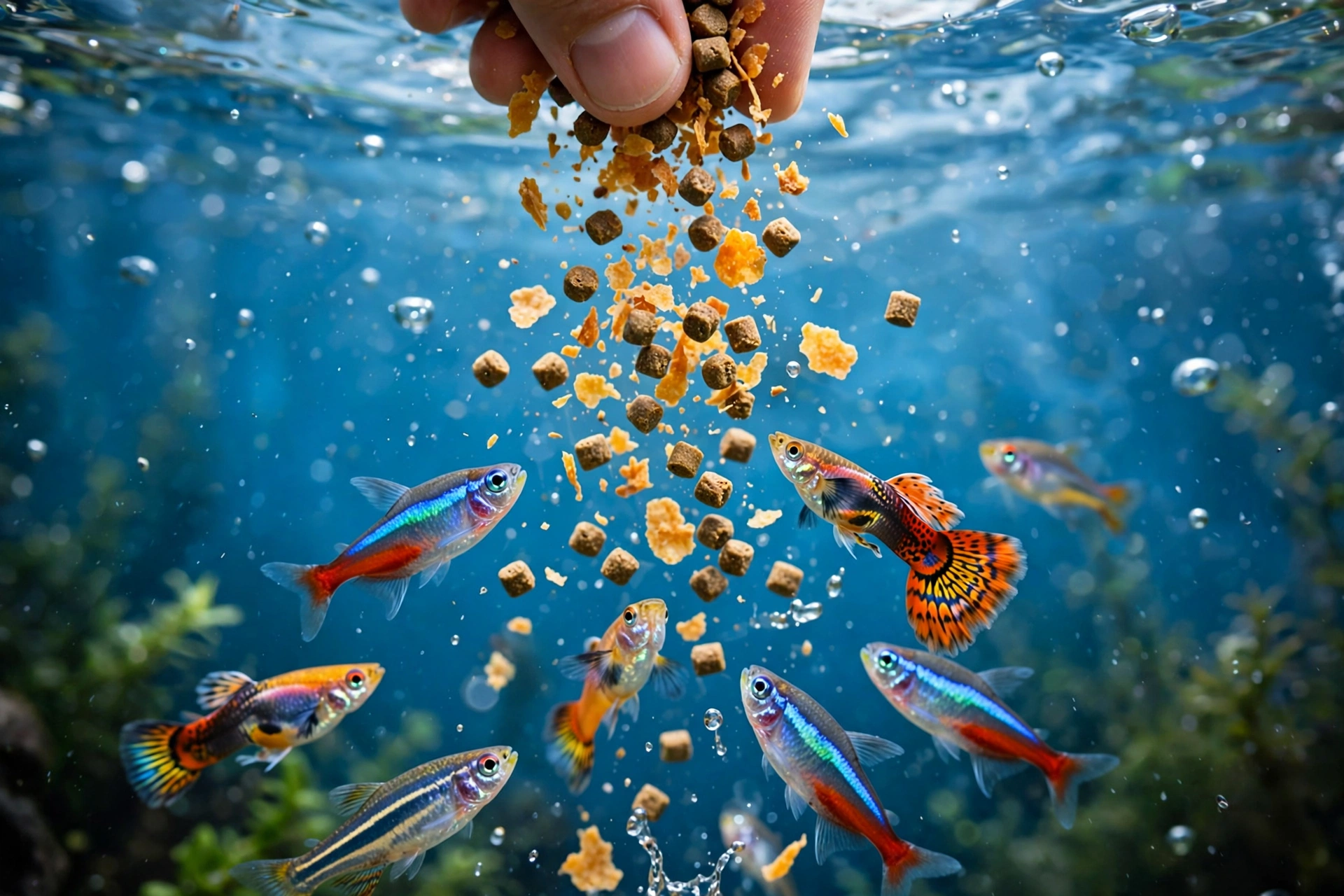
Not all fish food is interchangeable. Different fish eat in different parts of the water column, and the form of the food decides whether they actually get any of it.
Flakes
The classic. Flakes float briefly, then slowly sink, so mid-water and surface feeders can grab them. They’re convenient and most community fish will eat them. The downside: flakes lose nutrients quickly once exposed to air, and they crumble into dust that small-mouthed fish can’t eat. Buy small containers and replace them every 3–4 months.
Pellets
Floating pellets are great for surface feeders like bettas and gouramis. Slow-sinking micro pellets suit tetras, rasbories, and other small-mouthed fish — these are often better than flakes because each pellet is a complete bite and they hold their nutrition longer. Sinking pellets and wafers are made for bottom dwellers: corydoras, loaches, plecos.
Freeze-Dried Foods
Bloodworms, brine shrimp, daphnia, tubifex — sold as dried cubes or loose. Fish go absolutely wild for these, and they’re a great protein-rich treat a few times a week. Soak freeze-dried food in a little tank water for a few minutes before feeding; dry pieces can swell inside a fish’s stomach and cause bloating.
Frozen Foods
Frozen bloodworms, brine shrimp, mysis shrimp, and daphnia come in blister packs of cubes. Thaw a cube in a cup of tank water, then pour it in. This is the closest thing to a natural diet for most tropical fish, and it’s what I feed more than anything else. Store in the freezer — thawed food shouldn’t be refrozen.
Live Foods
Brine shrimp hatcheries, microworms, grindal worms, daphnia cultures. Live food triggers a feeding response nothing else matches and is the gold standard for conditioning fish to breed and raising fry. It’s more effort, so most keepers use it as a supplement rather than the whole diet.
Vegetables and Algae Wafers
Plecos, mollies, goldfish, and many cichlids need plant matter. Blanched zucchini, cucumber, shelled peas, and spinach are cheap and effective — weigh them down with a veggie clip and remove leftovers after a few hours. Algae wafers are the convenient daily option for bottom-feeding herbivores.
How to Read a Fish Food Label (in 30 Seconds)
You don’t need a degree in fish nutrition. Check three things:
- First ingredients. Look for whole fish meal, whole krill, or whole shrimp near the top. If the first ingredients are wheat flour, soybean meal, and “fish meal” (unspecified), it’s filler-heavy food.
- Crude protein percentage. Most tropical community fish do well at 35–45% protein. Bettas and carnivores want 40%+. Goldfish and herbivores can be lower, around 30%.
- The date. Fish food goes stale. An opened container of flakes loses a meaningful share of its vitamins within a few months. If you can’t remember when you opened it, it’s time for a new one.
Skip foods loaded with artificial dyes. That neon-red flake looks exciting on the shelf, but the color comes from chemicals your fish don’t need. Good nutrition colors fish up naturally — carotenoids from krill and shrimp do the job without the dye.
Matching Food to Your Fish
Feeding gets easy once you stop buying “one food for everything” and start thinking about who eats where.
Tropical community tanks (tetras, rasbories, danios, guppies): A quality micro pellet or small flake as the daily staple, plus frozen daphnia or bloodworms 2–3 times a week. These fish are small-mouthed — crush anything oversized between your fingers. If you’re setting one up, our 10 gallon fish tank guide walks through stocking and care for the most popular beginner size.
Bettas: Bettas are carnivores with tiny stomachs — about the size of their eye. Feed 2–4 small floating pellets or a pinch of freeze-dried (pre-soaked) bloodworms per meal. Overfeeding a betta is almost a rite of passage for new owners; their bellies swell fast, and a swollen betta is a fasting betta for a day or two.
Goldfish: Goldfish are messy, hungry omnivores that will eat until they pop — don’t let them. Sinking pellets are better than floating flakes because goldfish gulp air at the surface, which contributes to buoyancy problems. Supplement with blanched peas and leafy greens. And yes, they need far more room than a bowl — our 20 gallon fish tank guide covers tank sizes that actually work for fancy goldfish.
African cichlids: Mostly herbivores and omnivores — feed a spirulina-based pellet or flake. Too much animal protein causes the dreaded Malawi bloat. Research your specific species; mbuna and peacocks have different needs.
Bottom feeders (corydoras, loaches, plecos, shrimp): These guys get the leftovers in a lot of tanks, and it’s not enough. Drop in sinking wafers or pellets after lights-out when the mid-water fish are calmer. Shrimp do great on dedicated shrimp pellets and blanched vegetables.
Fry: Newly hatched fry need food smaller than you’d believe — infusoria, powdered fry food, or freshly hatched baby brine shrimp for the first week or two, fed 3–4 times daily in tiny amounts.
How Much and How Often: The Rules That Actually Work
The classic rule still holds: feed only what your fish can finish in about two minutes, once or twice a day. Most adult fish do perfectly well on one good feeding a day; twice is fine if the portions are small.
A few rules I wish someone had told me on day one:
- Healthy adult fish can go a week without food. A weekend trip is nothing to worry about. Skip the vacation feeder blocks — they dissolve unevenly and pollute the tank.
- One fast day per week is good practice. It lets fish clear their digestive tracts and cuts down on waste. Wild fish don’t eat on a schedule.
- Watch the fish, not the clock. Active, bright-eyed fish with good color are being fed right. Bloated bellies, uneaten food on the substrate, or cloudy water mean you’re overdoing it.
- Feed in the same spot. Fish learn fast. Feeding in one corner makes it easy to see exactly how much is left uneaten.
5 Feeding Mistakes That Wreck Tanks
1. Overfeeding. The number one beginner mistake, full stop. Uneaten food rots, ammonia spikes, algae blooms, and your filter works overtime. When in doubt, feed less.
2. Feeding only one food forever. Would you eat the same meal three times a day for years? Variety covers nutritional gaps. Rotate at least two or three food types.
3. Using ancient food. That giant tub of flakes from two years ago? The vitamins are gone. Buy small, date the lid with a marker, replace every few months.
4. Feeding the tank, not the fish. Dumping food in and walking away is how it ends up in the filter intake. Watch them eat. It’s also the best part of the hobby.
5. “Feeding” the algae. Algae wafers for a pleco that doesn’t exist yet, or extra food “for the snails.” Feed your actual livestock; algae and detritus feed themselves.
Storing Fish Food the Right Way
Fish food hates heat, light, moisture, and air — which is exactly what a kitchen counter above the tank provides. Keep containers sealed tight, in a cool dark cupboard. Frozen food stays in the freezer, obviously, but don’t leave a thawed cube sitting out; portion what you need and put the rest back. For bulk buyers, split food into a small working container and keep the main bag sealed in the freezer — cold storage dramatically extends vitamin life.
Going Away? Here’s the Feeding Plan
For trips up to a week: do a water change before you leave, feed normally the morning you go, and do nothing while you’re gone. Healthy fish will be fine — genuinely. For longer trips, an automatic feeder loaded with pellets is far more reliable than a neighbor guessing portions (set it to feed less than you think). Dissolving vacation blocks are the one option I’d actively avoid; they can swing your water chemistry.
Frequently Asked Questions
How often should I feed my fish?
Once or twice daily is right for most adult aquarium fish. Feed only what they finish in about two minutes, and give them one fast day per week.
Can fish go without food for a few days?
Yes. Healthy adult fish easily handle 3–5 days without food, and most manage a full week. Don’t panic over a long weekend away.
Is it better to underfeed or overfeed?
Underfeed, every time. Fish handle hunger far better than they handle the ammonia spike from rotting excess food. A slightly hungry fish is a healthy fish.
What is the healthiest fish food?
There’s no single winner. A rotation wins: a quality staple pellet or flake with whole fish or krill as the first ingredient, plus frozen foods (bloodworms, brine shrimp, daphnia) several times a week. Variety beats any one “superfood.”
Do I need different food for different fish?
In a community tank, one good staple plus sinking wafers for bottom dwellers covers most setups. Specialists like bettas, goldfish, and African cichlids deserve food matched to their diet — carnivore, omnivore, or herbivore.
Why is my tank cloudy after feeding?
Almost always overfeeding. Cut portions in half, siphon uneaten food off the substrate, and check that your filter is sized for the tank — our best fish tank filters guide covers picking the right one.

4 Comments
Pingback: 30 Gallon Fish Tank: The Complete Setup, Stocking & Care Guide
Pingback: 5 Gallon Fish Tank: The Complete Setup, Stocking & Care Guide
Pingback: 40 Gallon Fish Tank: The Complete Setup, Stocking & Care Guide
Pingback: Aquarium Gravel: How to Choose the Right Substrate for Your Fish Tank