
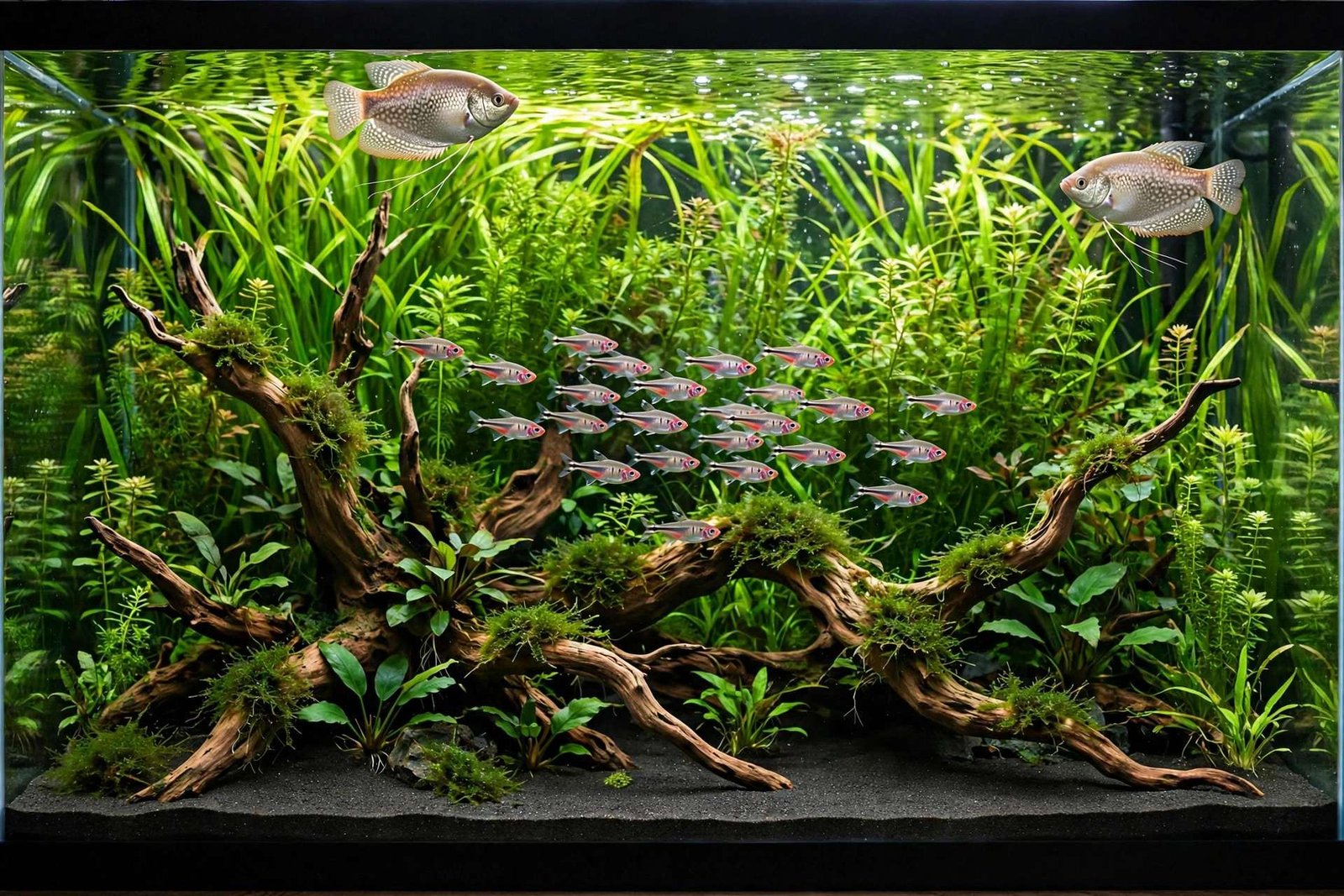
A 30 gallon fish tank is the point where this hobby stops feeling like a compromise. Ten gallons is a starter. Twenty is a sweet spot. Thirty is where you get a three-foot stretch of glass and enough water to keep a real community — schools that actually school, a proper centerpiece fish, and bottom feeders that earn their keep. It’s also the size where the water starts working for you: thirty gallons don’t swing temperature or chemistry the way a 5 gallon fish tank does, which means fewer crises and more time actually watching your fish.
That forgiveness is exactly why so many experienced keepers call a 30 gallon the ideal “second tank” — and one of the best first tanks for anyone who wants a community setup rather than a betta in a box. You pay more up front than for a 10 gallon fish tank, and it’s heavier and bigger, but the daily experience is calmer in every way. This guide covers everything: the right equipment, the setup, the cycle, three stocking plans that genuinely work, and the maintenance routine that keeps a 30 gallon thriving for years.
Why a 30 Gallon Is Where the Hobby Really Opens Up
Size changes the hobby in ways the pet store never explains. Here’s what thirty gallons buys you:
- Real schools. In a 10 or 20 gallon, a “school” is often six fish huddled in a corner. In a 30 gallon, twelve rummy nose tetras will actually cruise the length of the tank in formation — three feet of swimming room turns schooling fish into a living display.
- A centerpiece fish. Angelfish, pearl gouramis, a pair of German blue rams — species with real personality that need more room than a small tank offers. Thirty gallons is the first size where these become honest options instead of hopeful guesses.
- Stability you can feel. Thirty gallons of water resist change. A warm afternoon won’t cook it, a missed water change won’t crash it, and the nitrogen cycle has room to breathe. Beginners benefit from this as much as anyone — it’s the opposite of the hair-trigger chemistry of a nano tank.
- Forgiving stocking. You still can’t keep everything, but a 30 gallon absorbs mistakes that kill small tanks. A slightly overfed morning, a new fish added too fast — the volume dilutes the problem while you fix it.
The trade-off is honest: it’s bigger, heavier, and pricier. A filled 30 gallon weighs around 350 pounds and needs real furniture. But if you’re past the “one betta” stage and want an aquarium that feels like a little ecosystem, this is the tank.
30 Gallon Tank Dimensions and Weight
The standard 30 gallon is a 36″ long × 12″ wide × 16″ tall rectangle — three feet of front glass, which is what makes it such a good display tank. (There’s also a less common “30 breeder” at 36″ × 18″ × 12″ — shorter and wider, great footprint for bottom dwellers, but harder to find in kit form. Everything in this guide assumes the standard tall 30 unless noted.)
Filled weight is the part people underestimate: water alone is about 250 pounds, plus the glass tank, substrate, rocks, and equipment. Plan for roughly 330–350 pounds total. That means a real aquarium stand or solid, level furniture — not a bookshelf, not a particle-board dresser, and definitely not the floor of a closet. When in doubt, buy the stand made for the tank. Tanks crack from uneven support far more often than from anything swimming in them.
Equipment You Need for a 30 Gallon Tank
Same gear categories as any tank, sized up:
- Filter. This is the most important purchase. You want a filter rated a bit above your tank size — “rated for 30 gallons” usually means “barely adequate for 30 gallons.” A quality hang-on-back like the AquaClear 70 (300 GPH, rated 40–70 gallons) or the Seachem Tidal 75 (350 GPH) is the sweet spot for most 30 gallon setups: strong flow, huge media capacity, quiet. If you want silence and maximum media space, a small canister (Fluval 207 or 307 class) is the premium move — it hides under the stand and you barely hear it. Our guide to the best fish tank filters has full picks for every size, including models sized exactly for this tank.
- Heater. A 150-watt adjustable heater (roughly 5 watts per gallon). Adjustable, not preset — preset heaters drift, and while a 30 gallon forgives more than a nano, stable temperature is still the foundation of healthy fish. Place it near the filter outflow so the current spreads the warmth, and put a stick-on or digital thermometer on the opposite end of the tank so you can see the real number at a glance.
- Light. A full-length LED bar that spans the 36″ top. For fish-only setups any decent aquarium LED works; if you want live plants (and you should — more on that later), get a “planted tank” LED with adjustable brightness. Put it on a timer: 6–8 hours a day for planted tanks, up to 10 for fish-only. More light than that just grows algae.
- Substrate. For a 30 gallon you need roughly 30–40 pounds of substrate for a 2-inch bed. Sand looks natural and suits corydoras and other bottom dwellers (gravel can wear their barbels); dark sand makes fish colors pop beautifully. If you’re planting heavily, a nutrient-rich aquasoil under a sand cap is the enthusiast’s choice — pricier, but plants explode in it.
- Water conditioner. Dechlorinates tap water — chlorine and chloramine kill fish and wipe out the bacteria your filter is growing. A bottle sized for your water-change volume; at 30 gallons you’ll go through it steadily, so buy the bigger bottle.
- Test kit. The liquid API Freshwater Master Test Kit. Test strips exist; experienced keepers don’t trust them. In a 30 gallon you’ll test less often than with a nano, but when something looks off, you need numbers you can believe.
Also grab: a standard gravel vacuum (the full-size python-style or a simple siphon — at this size a bucket-and-siphon routine works fine), an algae scraper or magnetic cleaner for 36″ of glass, a fish net, and a couple of 5-gallon buckets used only for the aquarium. A basic quarantine/hospital setup (even a spare 10 gallon with a sponge filter) is worth its weight in gold once you start adding livestock regularly.
How to Set Up a 30 Gallon Fish Tank: Step by Step
- Place the stand and level it. This is a 350-pound decision — once it’s filled, it isn’t moving. Solid floor, level stand, away from windows (sunlight = algae and temperature swings) and away from radiators, AC vents, and high-traffic bumps. Use a spirit level; shim the stand if needed. An unlevel tank stresses the silicone seams unevenly.
- Rinse the substrate — thoroughly. Thirty-plus pounds of sand or gravel holds a shocking amount of dust. Rinse it in batches in a bucket until the water runs mostly clear. Skipping this is how you get a tank that stays cloudy for a week.
- Add substrate and hardscape. Spread 2 inches of substrate (deeper at the back if you want a sense of depth), then arrange rocks and driftwood while the tank is empty. Soak driftwood first — it floats for days and leaches tannins (harmless, but it tea-stains the water). This is also the moment to decide your layout: tall plants and hardscape at the back, open swimming space at the front.
- Plant heavily if you’re going planted. A 30 gallon is a fantastic planted tank — you’ve got real depth for a layered scape. Easy winners: Amazon swords and vallisneria in the back, anubias and Java fern tied to wood, dwarf sagittaria or crypts in the midground. Plant densely from day one; plants outcompete algae for nutrients and give shy fish the cover that makes them confident enough to show their colors.
- Install equipment. Filter on one end (intake low, outflow creating gentle surface movement across the length), heater near the filter outflow, light on top, thermometer on the far end. Don’t plug anything in yet.
- Fill slowly. Lay a dinner plate or plastic bag on the substrate and pour onto it so you don’t crater your scape. Add water conditioner as you fill — dose for the full tank volume.
- Power up and leak-check. Plug in the filter and heater, confirm real water movement, and watch the seams for an hour. Set the heater to your target (most tropical communities: 76–78°F) and verify against the thermometer the next day — trust the thermometer, not the dial.
- Cycle before any fish. Non-negotiable, and it matters more here because you’ll be adding more fish. Details in the next section.
- Add livestock in waves. First school, wait a week, test, next group. A 30 gallon’s bacteria colony is bigger than a nano’s, but it’s still young — patience now means a stable tank for years.
Cycling a 30 Gallon the Fishless Way
Your filter is a bacteria farm, and right now the farm is empty. Beneficial bacteria convert ammonia (fish waste) → nitrite (still toxic) → nitrate (much safer, removed by water changes). Until that colony is established, any fish you add swims in poison. Fishless cycling grows the colony before the fish arrive:
- Add an ammonia source daily — pure ammonia dosed to 2–4 ppm, or a pinch of fish food rotting in the tank. Test ammonia, nitrite, and nitrate every couple of days with the liquid kit.
- You’ll watch ammonia spike then fall, nitrite spike then fall, and nitrate steadily climb. That’s the cycle establishing itself, in order.
- The tank is cycled when a full ammonia dose converts completely to nitrate within 24 hours, with zero ammonia and zero nitrite left over. In a 30 gallon, expect 3–6 weeks. A bigger tank isn’t faster — there’s more water to colonize.
- Do a large water change at the end to bring nitrates down, then add your first fish.
Two things that genuinely help: seeding the filter with media from an established tank (ask a local fish club — keepers love sharing), and keeping the water warm (78–80°F) during the cycle since bacteria colonize faster in warmth. What doesn’t help: “bacteria in a bottle” as a substitute for the process. Some bottled products give the cycle a nudge; none of them replace testing and patience. And never cycle with live fish if you can avoid it — “they’re just cheap danios” is how the hobby loses beginners.
Stocking a 30 Gallon: 3 Plans That Actually Work
These are complete, compatible setups — pick one and run it as written rather than mixing across plans. All three assume a cycled, planted-or-plantable tank at 76–78°F.
Plan 1: The Classic Peaceful Community
The setup that made the 30 gallon famous — calm, colorful, and endlessly watchable:
- 12 rummy nose tetras — the tightest-schooling tetra in the hobby; in a 3-foot tank they move like one organism, and their red noses are a living water-quality indicator (pale noses = test your water).
- 8 panda or bronze corydoras — the cleanup crew with personality; they shoal, they play, and they sift the sand all day. Sand substrate matters for these little guys.
- 3 pearl gouramis (1 male, 2 females) — the centerpiece: big, shimmering, peaceful, and full of character. They’ll use the top half of the tank the tetras ignore.
- 1 bristlenose pleco — stays small (4–5″), eats algae off glass and wood, and has more personality than any “algae eater” has a right to.
- 4–6 otocinclus (add after the tank is mature, 2+ months in — otos need established algae and stable water).
Feed a proper varied diet — quality flakes or micro-pellets as the staple, frozen daphnia or brine shrimp a few times a week. Our fish food guide covers exactly what each of these species needs and how often to feed.
Plan 2: The Angelfish Showcase
For the keeper who wants drama — bigger fish, bolder behavior, a real focal point:
- 2 angelfish (a bonded pair, or two juveniles raised together) — the undisputed kings of the 30 gallon. Tall bodies, long fins, genuine personalities; a pair will claim a corner and possibly breed, which is a show in itself.
- 10 black phantom or lemon tetras — big enough not to become angelfish snacks (this is why you don’t put neons with angels), active enough to fill the midwater.
- 8 sterbai corydoras — hardy, beautiful, and warm-water tolerant, which matters since angels like it at 78–80°F.
- 1 bristlenose pleco — the algae crew.
One honest warning: angelfish grow, and they get territorial about it. Two is the number for a 30 gallon — three or four juveniles sounds fun until two pair off and make everyone else’s life miserable. If you want more angels, you want a bigger tank. And keep the lid on: angels spook and jump more than you’d expect.
Plan 3: The Planted Nano Paradise
Proof that small fish in a big tank is a legitimate aesthetic — a dense jungle with clouds of tiny, glittering fish:
- 12 chili rasboras — barely an inch long, deep red, and they school tightly over plants. Twelve chilis in a planted 30 gallon looks like embers drifting in a forest.
- 10 celestial pearl danios — galaxy-patterned, endlessly active, and they use every inch of a planted tank.
- 8 pygmy corydoras — the only cory that swims midwater in a shoal instead of hugging the bottom.
- A cherry shrimp colony (start with 15–20; they’ll breed) plus 3–4 nerite snails — the cleanup crew that doubles as entertainment.
- Heavy planting required — this plan only works as a jungle. Moss, stem plants, floating plants for dappled light. The plants are the filtration backup and the fish’s security blanket in one.
This is the lowest-bioload plan of the three and the most forgiving on maintenance — but it’s the most demanding on planting. If you’re not ready to go full jungle, run Plan 1 instead.
What Doesn’t Belong in a 30 Gallon
Every tank size has a “looks fine at the store, disaster at home” list. For a 30 gallon:
- Oscars, bala sharks, and common plecos. The store sells them at 2 inches; they grow to 12–24 inches. A common pleco alone will outgrow a 30 gallon and produce more waste than your filter can process. These are 55–125+ gallon fish.
- Goldfish in a tropical community. A 30 gallon can house two fancy goldfish on their own — but goldfish are cold-water waste machines that don’t belong with tropical community fish, and one common goldfish needs 55+ gallons. Don’t mix the two worlds.
- A third angelfish. Covered above — two is the number.
- “Algae eater” Chinese algae eaters. They stop eating algae as adults and start rasping the slime coats off your other fish. The bristlenose in the plans above is the correct answer.
- Anything the store can’t tell you the adult size of. “Stays small” is the most expensive lie in the hobby. Look up every species yourself before it goes in the bag.
30 Gallon Maintenance Schedule
The payoff for the bigger tank: the routine is calmer than a nano’s, and the whole thing takes about 20 minutes a week.
- Weekly: 25–30% water change with the gravel vacuum — push the vacuum into the substrate in sections (a third of the tank floor each week, rotating) to pull out trapped waste. Treat the new water with conditioner and match the temperature before it goes in. While you’re at it, wipe the front glass and glance at the thermometer.
- Every 2 weeks: Rinse mechanical filter media (sponges, pads) in old tank water from a water change — never tap water, never soap. Check filter flow; a slowing filter is usually a clogged sponge, not a broken motor.
- Monthly: Full liquid test panel (ammonia, nitrite, nitrate, pH) even when everything looks fine — 30 gallons hide problems longer, which means you want early warning. Trim plants, clean the light cover (dust and hard-water film dim your light more than you’d think), and check heater function against the thermometer.
- Quarterly: Deep-check equipment — impeller cleaning on the filter, heater calibration, inspect silicone seams and the stand for moisture. Replace chemical media (carbon, Purigen) if you use it.
5 Mistakes That Ruin 30 Gallon Tanks
- Skipping the cycle because “it’s a big tank.” Volume doesn’t replace bacteria. An uncycled 30 gallon with twenty new fish is a mass-casualty event in slow motion — ammonia climbs for days while the fish suffer. Fishless cycle first, every time.
- Stocking everything on day one. The tank looks empty and the store is exciting, so all thirty fish go in at once. The young bacteria colony can’t handle the load, ammonia spikes, and you’re doing emergency water changes for a month. Waves, a week apart, with testing between — that’s the whole secret.
- Mixing incompatible temperaments. Peaceful tetras with a breeding pair of convict cichlids. Tiny shrimp with angelfish (expensive snacks). A 30 gallon gives you options, not immunity — check every species’ temperament against every other species before buying.
- No quarantine for new fish. The bigger the community, the more one sick newcomer costs you. A simple spare tank with a sponge filter, two to four weeks of observation — this single habit separates keepers who lose whole tanks from keepers who don’t.
- Weak furniture and skipped water changes. The two slow killers. A 350-pound tank on a wobbly stand is a flood waiting for a bad day, and “the water looks clear” is not the same as “the water is clean” — nitrates are invisible, and they climb whether you watch or not. The weekly change is the price of the hobby; at 30 gallons it’s twenty peaceful minutes, not a chore.
FAQs
How many fish can I put in a 30 gallon tank?
Roughly 20–30 small community fish (tetras, rasboras, small barbs), plus a bottom crew of 6–8 corydoras and a centerpiece fish or pair. The old “one inch per gallon” rule is a rough starting point, not a law — behavior, bioload, and swimming space matter more. The three stocking plans above are all proven, fully-stocked 30 gallon communities; start from one of those rather than improvising.
Is a 30 gallon fish tank good for beginners?
It’s one of the best beginner sizes there is — if you want a community tank. The water volume forgives the mistakes beginners make: overfeeding, missed water changes, slightly off stocking. It’s more work and money up front than a 10 gallon fish tank, but the day-to-day experience is calmer. If you only want a betta or a shrimp tank, though, it’s overkill — match the tank to the goal.
What size filter do I need for a 30 gallon tank?
One rated for 40–70 gallons — oversizing the filter is standard practice. An AquaClear 70 or Seachem Tidal 75 hang-on-back is ideal for most setups; a Fluval 207-class canister if you want silence and maximum media. Aim for 4–6x turnover per hour (120–180 GPH minimum for 30 gallons) and prioritize media capacity over raw flow numbers. Full model-by-model picks are in our best fish tank filters guide.
How much does a 30 gallon fish tank weigh filled?
About 330–350 pounds — roughly 250 pounds of water plus the tank, substrate, rocks, and equipment. Use a real aquarium stand or solid, level furniture rated for the weight, and level it before filling. Once it’s full, it’s not moving.
Can I keep goldfish in a 30 gallon tank?
Two fancy goldfish (fantails, orandas) can live in a 30 gallon on their own — but not mixed with tropical community fish, since goldfish prefer cooler water and produce far more waste. A single common or comet goldfish needs 55+ gallons. If your heart is set on a tropical community, skip goldfish entirely.
How often should I change the water in a 30 gallon tank?
25–30% once a week. That’s the baseline for a normally stocked community; heavily stocked or messy-eater tanks (goldfish, big cichlids) may need more. Test nitrates monthly — if they climb past 40 ppm between changes, increase the volume or frequency.
Can angelfish live in a 30 gallon tank?
Yes — a pair of angelfish is one of the classic 30 gallon centerpieces. Two is the right number; more than that invites pairing aggression in this footprint. Give them tall plants or driftwood to claim as territory, keep tankmates too big to be eaten (no neons), and keep a lid on the tank.
20 gallon vs 30 gallon — which should I get?
A 20 gallon fish tank is cheaper, lighter, and easier to place — and it’s plenty for a modest community. A 30 gallon gives you three feet of swimming room, genuinely stable water, and stocking options (angelfish pairs, big schools, pearl gourami trios) that don’t honestly fit in a 20. If you have the space and the budget, and you want a community tank you’ll keep for years, the 30 is worth the step up.

1 Comment
Pingback: 20 Gallon Fish Tank: The Complete Setup, Stocking & Care Guide