

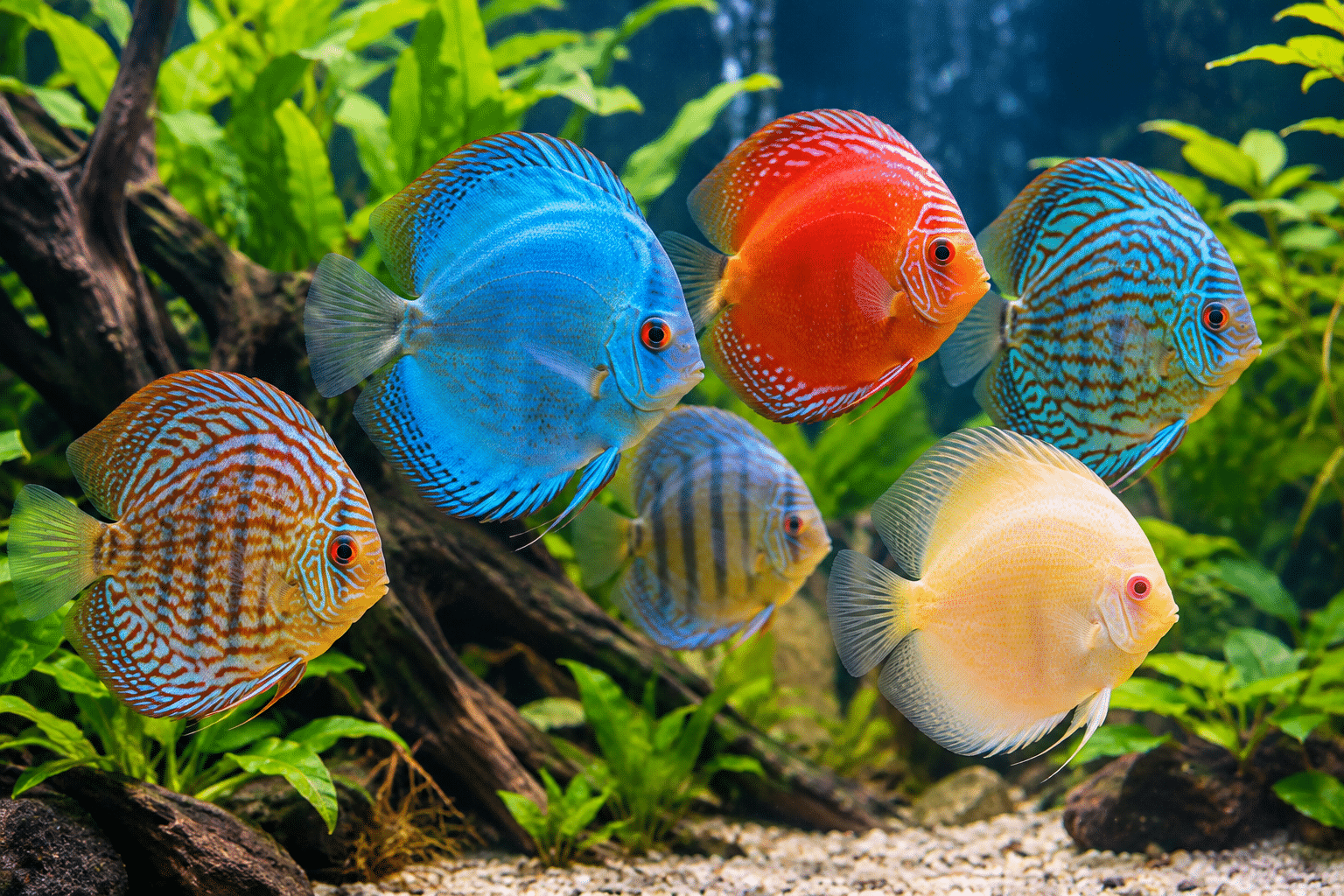
Discus fish are among the most beautiful freshwater fish you can keep in an aquarium. Their round body, bright colors, and calm swimming style make them a favorite among fish keepers. But their beauty comes with some care requirements.
Discus fish need warm, clean, and stable water, good filtration, proper food, and enough space to live comfortably. With the right setup and regular maintenance, they can become healthy and long-term aquarium pets.
Here is what you should know before adding Discus fish to your tank.
What Is a Discus Fish?
Discus fish are freshwater cichlids from the Symphysodon genus. They are native to the Amazon Basin in South America, where they live in warm, slow-moving waters around plants, roots, and other natural cover.
They are peaceful and social fish. Unlike many aquarium fish that can live alone, Discus generally do better when kept in groups.
Their round, laterally compressed body gives them their famous “discus” shape. They are available in many colors and patterns, including blue, red, turquoise, pigeon blood, and snake skin varieties.
How Big Do Discus Fish Get?
Adult Discus can reach around 8 to 10 inches (20–25 cm) under good conditions. Their final size depends on genetics, food, water quality, tank conditions, and overall care.
Young Discus need special attention because poor nutrition or poor water quality can affect their growth. A clean aquarium and a balanced diet are important for healthy development.
Discus can also live for many years when properly cared for. In a suitable aquarium, they may live around 10–15 years.
What Size Tank Do Discus Fish Need?
Tank size is one of the first things to consider before buying Discus.
Discus are social fish and should generally be kept in a group rather than alone. A larger aquarium also makes it easier to maintain stable water conditions.
A practical setup should provide:
- Enough swimming space for the whole group
- Strong biological filtration
- Stable water temperature
- Good water circulation without excessive current
- Open swimming areas
- Hiding places and natural decorations
For a group of Discus, a 75-gallon or larger aquarium is a better starting point than a small tank. If you plan to keep more fish, increase the tank size accordingly.
What Water Parameters Do Discus Fish Need?
Water quality is one of the most important parts of Discus care.
Discus prefer warm, clean, and stable water. Sudden changes can cause stress and may contribute to health problems.
Important parameters include:
- Temperature: around 82–86°F (28–30°C)
- pH: generally mildly acidic to neutral water is suitable
- Ammonia: 0 ppm
- Nitrite: 0 ppm
- Nitrate: keep it low through filtration and regular water changes
- Hardness: avoid sudden changes and keep conditions stable
The exact water requirements can vary depending on the fish and the way they have been raised. Stability is often more important than constantly trying to match a particular number.
Always test your aquarium water regularly, especially after setting up a new tank.
What Do Discus Fish Eat?
A good diet helps Discus grow properly and maintain strong colors and overall health.
You can feed Discus a combination of quality foods such as:
- High-quality Discus pellets
- Frozen foods
- Brine shrimp
- Bloodworms
- Other suitable frozen or prepared foods
Young Discus usually need more frequent feeding because they are growing quickly. Adult fish can be fed fewer times per day.
Avoid overfeeding. Uneaten food can quickly damage water quality, which is especially important in a Discus aquarium.
A good rule is to offer an amount the fish can consume within a few minutes and remove excess food when necessary.
What Are the Best Discus Fish Varieties?
Discus come in many attractive colors and patterns. Some popular varieties include:
- Blue Diamond Discus
- Pigeon Blood Discus
- Red Melon Discus
- Turquoise Discus
- Snake Skin Discus
- Albino Discus
Color and pattern can vary significantly between individual fish. When buying Discus, look beyond color and choose active fish with healthy body shape, clear eyes, and normal swimming behavior.
Are Discus Fish Good for Beginners?
Discus are not usually considered the easiest fish for a new aquarium keeper.
The main challenge is not that Discus are impossible to keep. The challenge is maintaining the conditions they need consistently.
Beginners should be prepared to manage:
- Warm water
- Stable water parameters
- Strong biological filtration
- Regular water testing
- Regular maintenance
- Proper feeding
If you already understand aquarium cycling, filtration, water testing, and routine maintenance, keeping Discus becomes much easier.
What Are the Best Tank Mates for Discus?
Discus are generally peaceful, but choosing tank mates requires care.
Good tank mates should be peaceful and comfortable in similar warm-water conditions. Some aquarists keep Discus with suitable species such as certain cardinal tetras and Corydoras.
Avoid aggressive, highly territorial, or fin-nipping fish. Fast and aggressive tank mates can also compete with Discus for food and make them stressed.
Before adding another species, check whether its temperature, water, behavior, and feeding requirements match those of Discus.
What Filter Is Best for a Discus Tank?
Good filtration is essential because Discus need clean and stable water.
A suitable Discus aquarium can use a quality canister filter, sponge filter, sump, or another properly sized filtration system.
The goal is not simply to create strong water flow. You need effective mechanical and biological filtration without creating excessive current that makes the fish uncomfortable.
A mature biological filter helps beneficial bacteria process harmful waste such as ammonia and nitrite.
Because Discus can be sensitive to poor water quality, avoid choosing a filter that is too small for your aquarium.
How Often Should You Change Discus Tank Water?
Regular water changes help control waste and maintain good water quality.
The exact schedule depends on factors such as:
- Tank size
- Number of fish
- Feeding amount
- Filtration
- Nitrate levels
- Overall water quality
Instead of following one fixed percentage for every aquarium, test your water and build a maintenance routine around your tank’s actual conditions.
Always make water changes carefully and avoid sudden changes in temperature or water chemistry.
How Do Discus Fish Behave?
Discus are peaceful and social fish. They often stay together as a group and may become more confident when kept with other Discus.
It is normal for a new Discus to hide after being introduced to an aquarium. However, constantly hiding, refusing food, unusual swimming, or major color changes can indicate stress or an environmental problem.
Provide a calm environment with suitable hiding places and avoid overcrowding the aquarium.
Can Discus Fish Be Bred in an Aquarium?
Yes, Discus can breed in captivity, although successful breeding requires suitable conditions and a compatible pair.
A breeding pair may clean a surface before spawning and then guard their eggs. One of the most interesting features of Discus breeding is that young fry can feed on a nutritious mucus produced by their parents.
Successful breeding usually requires excellent water quality, stable conditions, proper nutrition, and minimal stress.
How Can You Tell Male and Female Discus Apart?
Sexing Discus can be difficult, especially when they are young.
Adult males may become larger or develop different body and breeding characteristics, but these differences are not always reliable enough to identify sex with certainty.
For this reason, experienced breeders often rely on behavior, especially when Discus begin forming breeding pairs.
Final Thoughts
Discus fish can be an excellent choice for aquarists who are ready to give them the right environment. Their beautiful colors and peaceful behavior make them stand out in a freshwater aquarium.
The key is consistency. Give them a suitably large tank, warm and stable water, effective filtration, nutritious food, compatible tank mates, and regular maintenance.
If you can maintain these conditions, Discus can become one of the most rewarding fish to keep—and with proper care, they may remain part of your aquarium for many years.
