
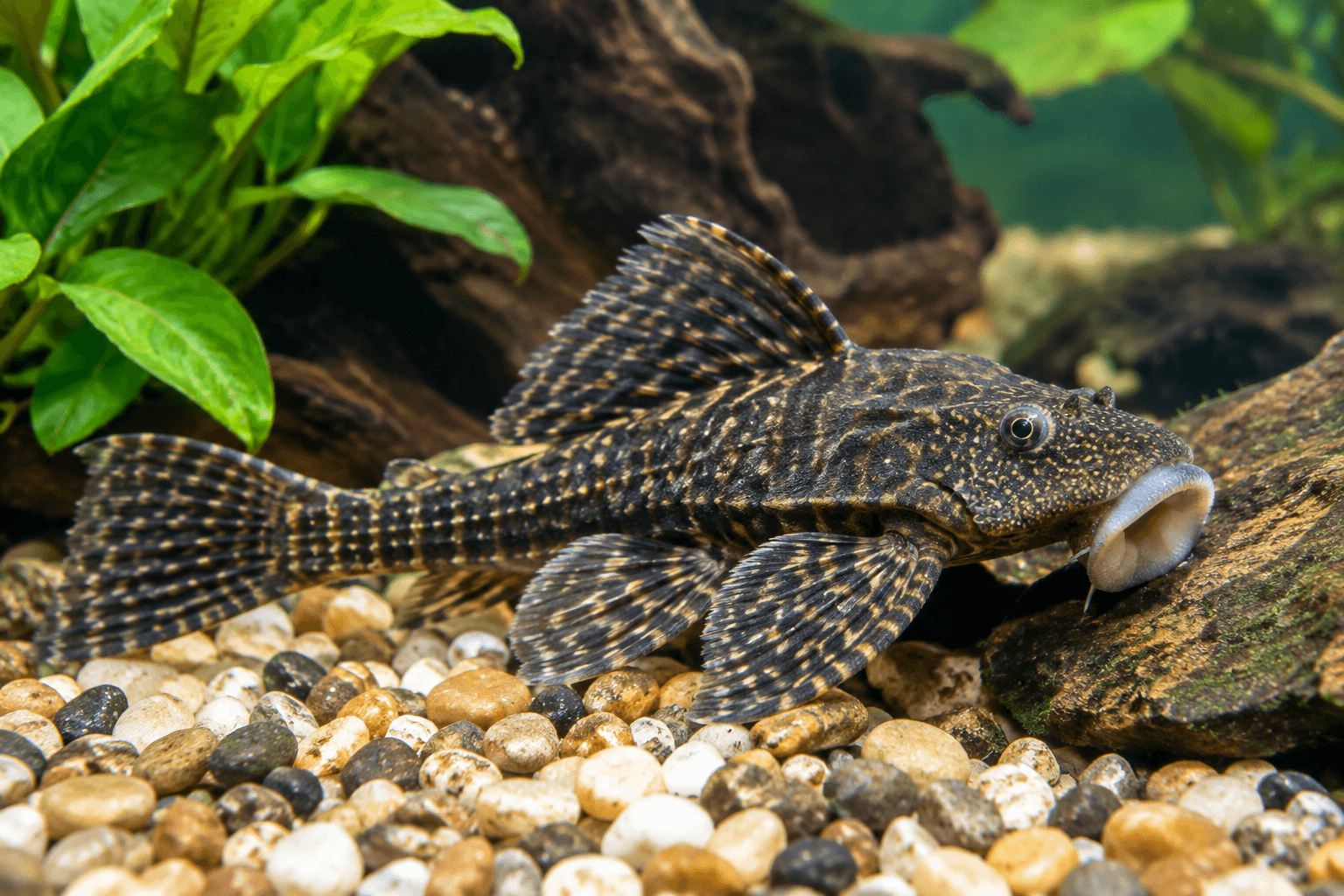
The Rubber Lip Pleco is a peaceful freshwater fish popular for its unique rubbery mouth, calm temperament, and habit of grazing on algae and biofilm. It spends most of its time near the bottom of the tank, clinging to rocks, driftwood, and glass.
While often sold as a simple “aquarium cleaner,” a Rubber Lip Pleco needs dedicated care to stay healthy. Clean water, high oxygen levels, good water flow, hiding spots, and a balanced diet are all essential.
Here is everything you need to know before adding one to your aquarium.
Quick Overview
| Feature | Details |
| Care Level | Easy to Intermediate |
| Temperament | Peaceful |
| Adult Size | 4 – 7 inches |
| Lifespan | 8 – 12 years |
| Minimum Tank Size | 25 – 30 gallons |
| Diet | Herbivore / Omnivore (Algae, Biofilm, Vegetables, Wafers) |
| Tank Region | Bottom-dweller |
What Is a Rubber Lip Pleco?
The Rubber Lip Pleco is a freshwater catfish from the Loricariidae family (specifically the Chaetostoma genus). You may also see it sold under these names:
- Rubbernose Pleco
- Rubber Lipped Pleco
- Bulldog Pleco
- L146 Pleco
Note: Because several closely related Chaetostoma species look almost identical, the exact scientific species name can vary depending on the fish store.
Size & Lifespan
- Adult Size: Commonly grows between 4 to 7 inches long.
- Lifespan: Can live 8 to 12 years with proper care and stable water conditions.
Pro Tip: Young plecos in pet stores look very small, but always plan your tank setup around their full adult size.
Tank Requirements & Decor
A 25 to 30-gallon long aquarium is the recommended minimum for one adult. A longer tank footprint is far better than a tall tank because it provides more bottom surface area for grazing and moving around.
Ideal Setup:
- Substrate & Rocks: Smooth gravel or sand with smooth rocks and slate.
- Driftwood: Essential for natural grazing surfaces and dark hiding spots.
- Hiding Areas: Caves, PVC pipes, or dense plants to help them feel secure during the day.
- Safety First: Avoid decorations with sharp edges that could scrape their sensitive underside.
Water Parameters
Rubber Lip Plecos thrive in clean, well-maintained freshwater. Keep your water quality consistent using the following targets:
| Water Parameter | Recommended Range |
| Temperature | 72°F – 78°F (22°C – 25.5°C) |
| pH Level | 6.5 – 8.0 |
| Water Hardness | 8 – 12 dGH |
| Ammonia & Nitrite | 0 ppm |
| Nitrate | < 20 ppm (Keep low with regular water changes) |
Filtration, Flow, & Oxygen Needs
In their native South American river habitats, Rubber Lip Plecos live in fast-flowing, highly oxygenated waters.
- Filtration: Use a reliable filter that provides strong circulation without blowing the fish around.
- Oxygenation: Increase surface agitation using air stones or powerheads. High dissolved oxygen is critical for their health.
- Tank Maturity: Always introduce them to a fully cycled, mature aquarium with established biofilm.
Diet & Feeding Guidelines
A common mistake is assuming a Rubber Lip Pleco can survive on tank algae alone. It requires regular, deliberate feeding.
Natural Grazing:
- Soft green algae
- Biofilm
- Diatoms (brown algae)
Supplemental Foods (Feed 5–6 times a week):
- Sinking Pellets & Wafers: High-quality algae wafers and spirulina pellets.
- Fresh Vegetables: Blanched zucchini, cucumber, spinach, and green peas.
- Protein (Occasional Treat): Bloodworms or brine shrimp once a week.
Feeding Tip: Plecos are nocturnal. Drop food into the tank right after turning off the aquarium lights. Remove any uneaten fresh vegetables after 12 to 24 hours to prevent spoiling the water.
Does It Eat All Types of Algae?
No. While Rubber Lip Plecos are great at cleaning soft algae and biofilm, they usually ignore tough, invasive algae like Black Beard Algae (BBA) or Hair Algae. Never buy one solely to clear up a severe algae outbreak.
Tank Mates & Behavior
Rubber Lip Plecos are peaceful, bottom-dwelling fish that spend the day hiding and become active at night. They rarely bother other tank mates.
Excellent Tank Mates:
- Mid/Top Dwellers: Tetras, Rasboras, Danios, and Guppies.
- Peaceful Bottom Dwellers: Corydoras catfish and kuhli loaches.
- Invertebrates: Amano shrimp, cherry shrimp, and mystery snails.
Fish to Avoid:
- Large, aggressive cichlids (e.g., Oscars or Jaguars).
- Highly territorial bottom-dwellers that may fight over caves.
Rubber Lip Pleco vs. Bristlenose Pleco
| Feature | Rubber Lip Pleco | Bristlenose Pleco |
| Head Appearance | Smooth, wide rubbery mouth | Tentacle-like bristles on mature males |
| Habitat Preference | Fast-flowing, oxygen-rich currents | Moderate currents, calm waters |
| Wood Requirement | Benefits from driftwood | Requires driftwood in its diet |
| Max Size | 4 – 7 inches | 4 – 5 inches |
Common Health Issues & Care Tips
Most health problems stem from poor water quality or starvation. Watch out for:
- Sunken Belly / Weight Loss: A sign of underfeeding or internal parasites.
- Rapid Gilling / Gasping: Indicates low oxygen levels or elevated ammonia/nitrites.
- Color Loss: A sign of stress caused by poor water conditions or aggressive tank mates.
Frequently Asked Questions
Q1: How big does a Rubber Lip Pleco get?
A: An adult Rubber Lip Pleco typically reaches between 4 and 7 inches in length.
Q2: Does a Rubber Lip Pleco need driftwood in the tank?
A: Yes. Driftwood grows natural biofilm, offers necessary grazing surfaces, and provides vital hiding places.
Q3: Are Rubber Lip Plecos good for beginners?
A: Yes, as long as the beginner maintains clean water, ensures good oxygen levels, and provides supplemental food rather than relying only on tank algae.
Final Verdict
The Rubber Lip Pleco is a fantastic, hard-working addition to any peaceful freshwater community aquarium. By offering stable water parameters, plenty of oxygen, places to hide, and a well-rounded diet, you can enjoy this unique bottom-dweller for up to a decade!
