

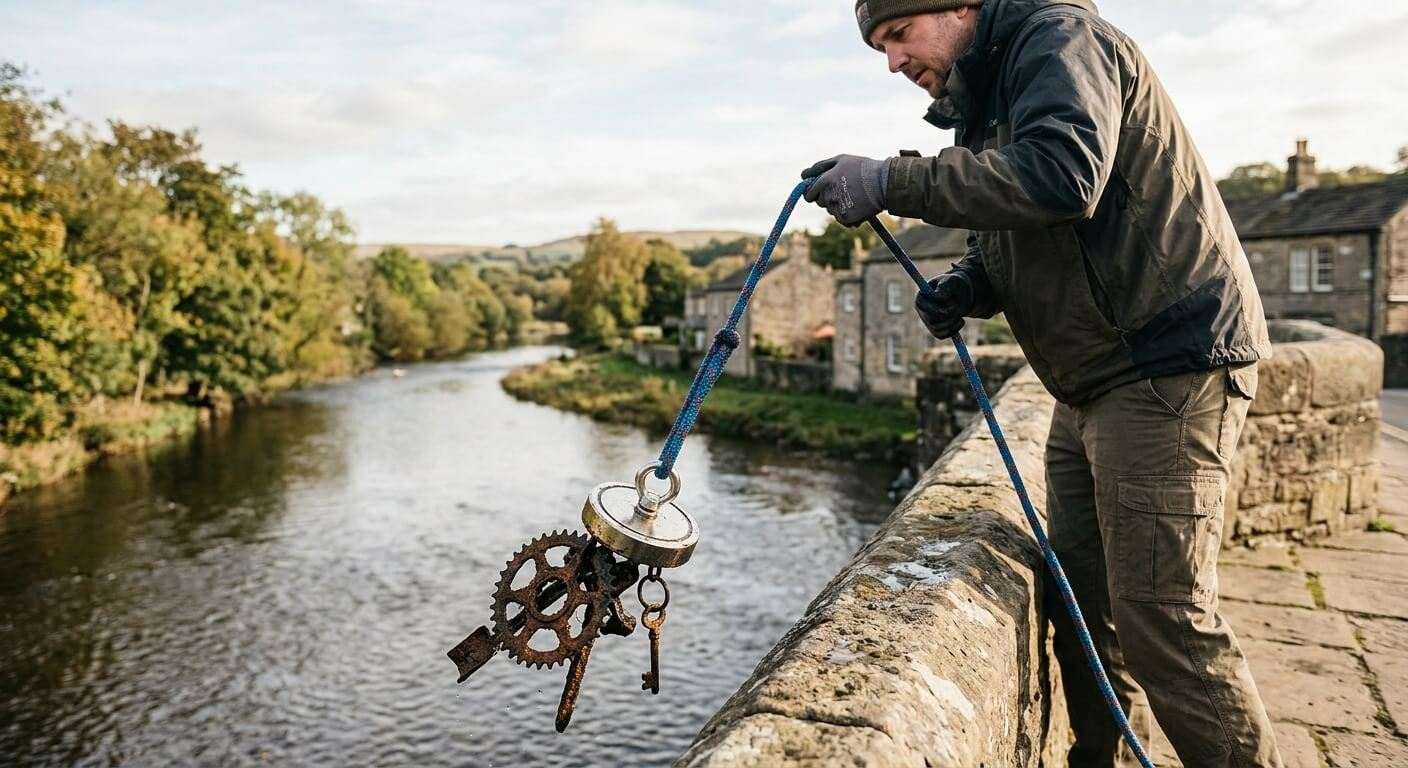
Have you ever wondered what might be hiding beneath the water in a river, canal, or lake? Magnet fishing is an exciting outdoor hobby that lets you explore underwater areas and recover magnetic objects using a strong magnet and rope. You might find old tools, metal chains, bicycle parts, or other forgotten items.
The best part is that you do not need years of experience to get started. With the right equipment, a little patience, and proper safety precautions, you can enjoy magnet fishing as a beginner.
In this guide, you will learn how magnet fishing works, which equipment you need, how to choose the right magnet, and what to know before your first trip.
What Is Magnet Fishing?
Magnet fishing is an outdoor activity that involves attaching a powerful retrieval magnet to a rope and lowering or casting it into water to recover magnetic metal objects.
Unlike traditional fishing, you are not trying to catch fish. Instead, you are searching for objects made from materials that respond to magnetic attraction, such as iron and many types of steel.
People enjoy magnet fishing for different reasons. Some like the excitement of discovering unusual objects, while others enjoy cleaning up metal waste from waterways.
However, the objects you recover are not always valuable. Many finds are ordinary scrap metal, so it is best to enjoy the experience rather than expect to discover treasure every time.
What Equipment Do You Need for Magnet Fishing?
Before heading to the water, gather the essential equipment. A suitable setup makes the activity easier and helps reduce avoidable risks.
1. Magnet Fishing Magnet
The magnet is the most important piece of equipment. Neodymium magnets are commonly used because they provide strong magnetic attraction in a relatively compact size.
You can choose from several designs, including single-sided, double-sided, and 360-degree magnets. The best option depends on how you plan to use it and the types of objects you hope to recover.
2. Strong Rope
A suitable rope connects your magnet to your hand and helps you retrieve objects from the water.
Choose a durable rope with an appropriate working-load rating. Make sure its attachment is secure and follow the manufacturer’s instructions. Never assume that a rope is suitable simply because it looks thick.
3. Gloves
Protective gloves help reduce the risk of cuts from rusty metal, sharp edges, and rough surfaces.
Choose gloves that fit properly and provide suitable protection without making it difficult to handle the rope safely.
4. Secure Attachment Hardware
Use compatible attachment hardware and follow the magnet manufacturer’s instructions. Check knots, connectors, and other attachment points before every trip.
A loose connection can cause you to lose your magnet underwater.
5. Bucket and Cleaning Supplies
A sturdy bucket helps you carry small recovered objects and keep scrap organized. Bring suitable supplies for cleaning up the area, but do not handle unknown hazardous materials.
A grappling hook may also be useful for certain large objects, but it should not replace safe lifting methods or proper equipment.
Types of Magnet Fishing Magnets Explained
Choosing the right magnet can make a difference in your experience. Here are three common designs.
Single-Sided Magnets
These magnets concentrate their main attraction on one side. They are commonly used when lowering a magnet vertically or dragging it along a suitable underwater surface.
They can be a practical choice for beginners who want a simple setup.
Double-Sided Magnets
Double-sided magnets have attracting surfaces on two sides. Depending on their design, they can be useful for different retrieval techniques, including dragging or lowering.
Check the specific design before buying because performance varies between models.
360-Degree Magnets
These magnets are designed to provide magnetic attraction around multiple sides. They may increase the chance of contacting an object during certain retrieval techniques.
However, they can cost more, and their performance still depends on the object, contact conditions, and magnet design.
How to Choose the Right Magnet
A common beginner mistake is choosing a magnet based only on its advertised pull force.
Manufacturers usually measure pull force under particular test conditions. In real-world use, the force can be much lower if the magnet touches a rusty, curved, thin, or uneven object.
Before buying, consider these factors:
- Magnet design: Choose a single-sided, double-sided, or 360-degree model suited to your intended technique.
- Pull force: Compare manufacturer specifications, but remember that advertised force does not guarantee a particular lifting capacity underwater.
- Weight and handling: A larger, heavier magnet may be harder to manage, especially for beginners.
- Rope compatibility: Ensure your rope and attachment hardware are suitable for the intended loads.
- Build quality: Look for clear product specifications and care instructions from a reputable seller.
The strongest magnet is not automatically the best choice. A manageable, well-matched setup is a better starting point.
How to Start Magnet Fishing Step by Step
Getting started is simple when you follow a careful routine.
Step 1: Choose a suitable location. Look for an accessible riverbank or other permitted area where you can work safely. Check local rules and obtain any required permission before beginning.
Step 2: Inspect your equipment. Check the magnet, rope, knots, connectors, and protective gear for damage.
Step 3: Position yourself safely. Stand on stable ground away from slippery edges. Avoid leaning over the water or wrapping the rope around your hands or body.
Step 4: Lower or cast the magnet carefully. Use a controlled technique appropriate to your surroundings. Avoid throwing the magnet near other people, boats, or swimmers.
Step 5: Retrieve it slowly. Pull steadily and maintain control of the rope. If an object is too heavy to recover safely, do not force it.
Step 6: Inspect your finds. Handle ordinary objects carefully, keep the area tidy, and dispose of unwanted scrap responsibly.
With practice, you will learn which techniques work best in different locations.
What Can You Find While Magnet Fishing?
One of the most exciting parts of magnet fishing is not knowing what might come out of the water.
Common discoveries include:
- Nails, bolts, and metal fasteners
- Old tools and chains
- Bicycle parts
- Scrap iron and steel
- Fishing-related metal equipment
- Other discarded metal objects
Some people occasionally recover unusual or historically interesting items, but valuable discoveries are not guaranteed.
Remember that ordinary fishing magnets attract ferromagnetic materials, especially iron and many types of steel. Pure gold, silver, copper, and aluminum are not normally attracted to a standard magnet.
An object made from several materials may still be recovered if it contains a magnetic component.
Magnet Fishing Safety Tips
Safety should always come before finding an interesting object. Waterways can contain sharp metal, unstable ground, and dangerous items.
Follow these precautions:
- Wear protective gloves and suitable footwear.
- Keep a safe distance from slippery banks and deep water.
- Never wrap the rope around your fingers, hands, or body.
- Keep fingers away from the magnet and metal surfaces where they could become trapped.
- Do not attempt to lift an object that is too heavy for your equipment.
- Keep children and bystanders away from the retrieval area.
- Inspect your magnet and rope regularly for damage.
Important: If you recover a firearm, ammunition, suspected explosive, or another potentially dangerous object, stop immediately. Do not touch, move, or attempt to clean it. Keep people away and contact the appropriate local authorities.
Is Magnet Fishing Legal?
Magnet fishing is not permitted everywhere under the same rules. Regulations can depend on your country, local authority, waterway manager, land ownership, and the type of object recovered.
Before starting, check whether you need permission to access the location or carry out magnet fishing. Also investigate restrictions around protected heritage sites, bridges, private property, and managed waterways.
If you recover something that may be historically significant or legally restricted, check the reporting and ownership requirements before keeping it.
Never assume that public access automatically means magnet fishing is allowed.
What Should You Do With Your Finds?
After a successful trip, separate ordinary scrap from objects that need special attention.
Clean and store ordinary items only when it is safe to do so. Recycle or dispose of unwanted metal through an appropriate local service instead of leaving it on the bank.
Do not open sealed containers or handle unknown chemicals, weapons, or suspicious objects. Contact the relevant authorities if you discover anything potentially dangerous.
Leaving the area cleaner than you found it helps protect waterways and makes the hobby more responsible for everyone.
Frequently Asked Questions
Is magnet fishing good for beginners?
Yes. Beginners can start with a suitable retrieval magnet, compatible rope, protective gloves, and a safe, permitted location. Learning basic techniques and safety precautions is more important than buying expensive equipment.
What is the best magnet for magnet fishing?
The best magnet depends on your experience, preferred technique, budget, and the conditions where you plan to fish. Compare magnet design, specifications, weight, and attachment quality rather than choosing by advertised pull force alone.
Can magnet fishing find gold?
A standard magnet will not normally attract pure gold. Magnet fishing is mainly used to recover iron and other ferromagnetic objects.
Can magnet fishing damage a magnet?
Yes. Strong magnets can chip, crack, or suffer coating damage if they strike hard surfaces. Inspect your equipment regularly and follow the manufacturer’s care instructions.
Do you need permission for magnet fishing?
You may need permission depending on the location and local regulations. Always check the rules and access requirements before entering a waterway or starting the activity.
Final Thoughts
Magnet fishing combines outdoor exploration, curiosity, and the chance to recover forgotten metal objects. You can get started with a suitable magnet, a reliable rope, protective gloves, and a little preparation.
Choose equipment that matches your needs, learn safe retrieval techniques, and check local rules before every new trip. Most importantly, treat every discovery with care and leave the waterway clean.
You may not find treasure every time, but with patience and responsible preparation, magnet fishing can become an enjoyable outdoor hobby.
