

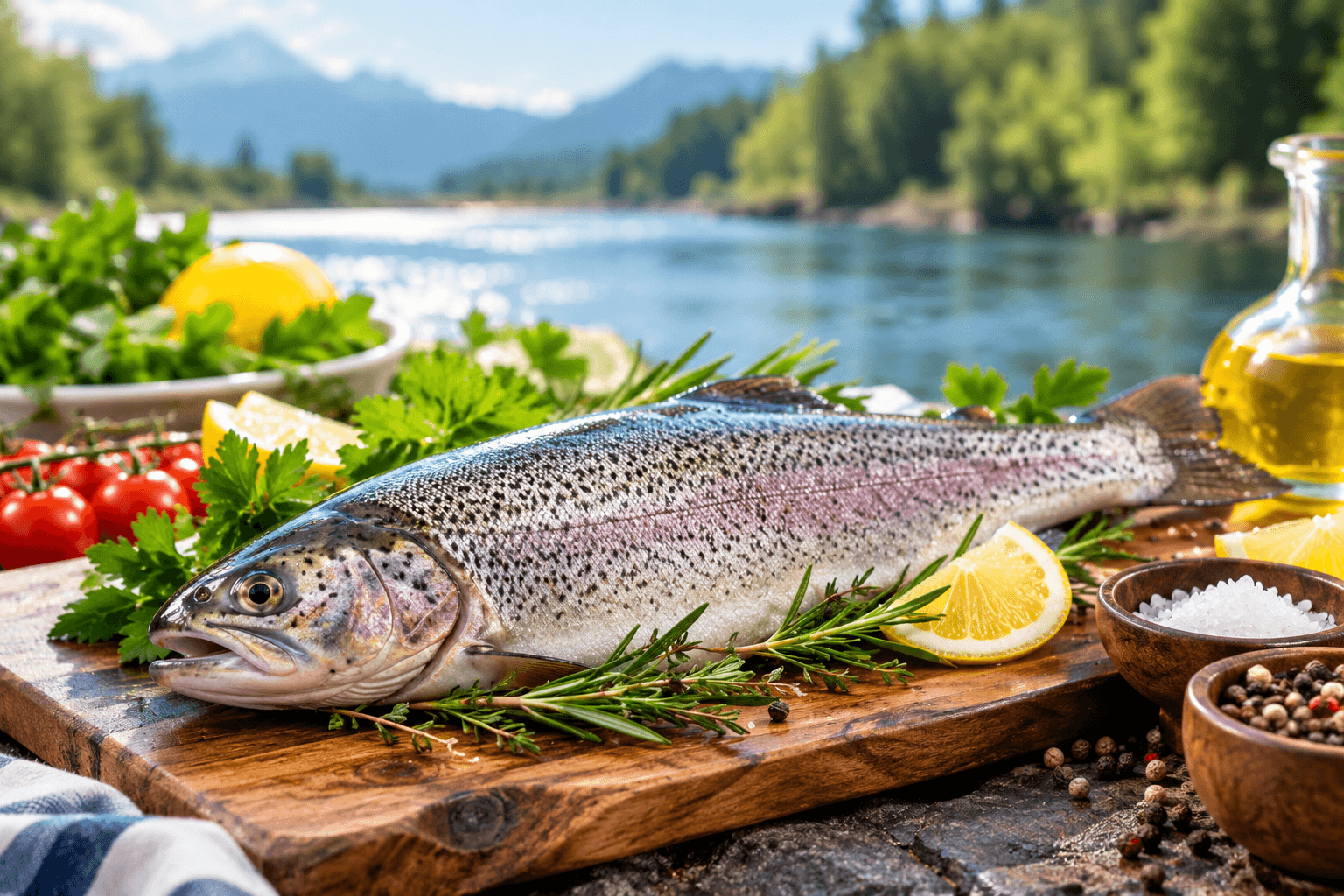
If you love seafood but want a light, protein-packed option, you’ve likely wondered: is trout healthy, or is salmon a better choice?
The short answer is yes—trout is exceptionally healthy. It is loaded with high-quality protein, heart-healthy omega-3 fatty acids, essential vitamin B12, and vitamin D. Best of all, it is one of the lowest-mercury fish available today.
Here is everything you need to know about trout’s nutrition, safety facts, cooking methods, and how it compares to other popular seafood.
Quick Nutrition Breakdown (Per 3 oz Serving)
| Nutrient | Daily Value / Amount | Why Your Body Needs It |
| Protein | ~20g | Builds muscle, repairs tissue, and keeps you full. |
| Omega-3s | High (EPA & DHA) | Supports heart, brain, and joint health. |
| Vitamin B12 | High | Boosts energy levels and supports red blood cells. |
| Vitamin D | Moderate-High | Strengthens bones and boosts immune function. |
| Selenium | High | Protects cells from damage as a powerful antioxidant. |
| Potassium | Moderate | Regulates blood pressure and fluid balance. |
9 Science-Backed Health Benefits of Trout
1. High in Pure, Lean Protein
A single 3-ounce cooked serving of rainbow trout delivers roughly 20 grams of protein for just 140 calories. It is an excellent alternative to red or processed meats for building muscle and staying satiated.
2. Loaded with Essential Omega-3 Fatty Acids
Trout provides both EPA (eicosapentaenoic acid) and DHA (docosahexaenoic acid). These long-chain fatty acids reduce inflammation, protect your heart, and maintain optimal brain function without requiring extra supplements.
3. Packed with Essential Vitamins and Minerals
- Vitamin B12: Essential for proper nerve function and combatting daily fatigue.
- Vitamin D: Promotes optimal calcium absorption for stronger bone density.
- Selenium & Zinc: Powerful minerals that protect cells against oxidative damage.
4. Extremely Low in Mercury (FDA “Best Choice”)
Mercury exposure is a major concern with large ocean fish. Fortunately, freshwater rainbow trout is officially categorized by the FDA as a “Best Choice” low-mercury fish with an average concentration of just 0.07 ppm.
Note for Anglers: If you catch wild trout yourself, always verify local water advisories for regional chemical runoff or contaminants.
5. Wild Trout vs. Farmed Trout: Which Is Better?
Both options offer fantastic nutrition. While wild trout feed naturally and are slightly leaner, farmed rainbow trout are raised under strictly regulated aquaculture standards, providing a reliable, sustainable source of healthy omega-3s year-round.
6. Perfect Choice for Weight Loss
Because trout is protein-dense and low in calories, it promotes fullness and stops unnecessary snacking. Choosing light preparation methods like grilling or baking makes it a perfect staple for calorie-conscious diets.
7. Trout vs. Salmon: Which Should You Choose?
- Salmon: Higher in total fat and slightly higher in total omega-3s.
- Trout: Lighter in calories, milder in taste, and equally packed with protein.
Rather than choosing just one, incorporating both into your weekly diet ensures a wider variety of nutrients.
8. Is Smoked Trout Healthy?
While smoked trout keeps its high protein and nutrient profile, the sodium level increases significantly during the curing process. Enjoy smoked trout as an occasional treat, but stick to fresh or frozen trout for everyday meals.
9. Safe and Nutritious During Pregnancy
Due to its low mercury levels, the FDA specifically highlights freshwater trout as a safe, highly beneficial choice for pregnant or breastfeeding women seeking essential brain-building DHA for their babies.
5 Healthiest Ways to Cook Trout
Avoid ruining a healthy fish with excessive butter or deep frying. Instead, try:
- Baking: Roast with fresh lemon slice, garlic, and dill.
- Grilling: Sear lightly over open fire with olive oil spray.
- Air Frying: Get a crispy skin with zero heavy oils.
- Steaming: Cook gently with ginger and spring onions for a delicate meal.
- Pan-Searing: Cook in a non-stick pan using a touch of extra virgin olive oil.
How Much Trout Should You Eat Per Week?
The FDA recommends adults consume 2 to 3 servings (4 ounces per serving cooked) of low-mercury fish per week to maximize heart and brain benefits.
Frequently Asked Questions
Is trout high in omega-3?
Yes, trout contains significant amounts of bioavailable EPA and DHA omega-3 fatty acids.
Is trout low in mercury?
Yes, freshwater rainbow trout is officially rated as a “Best Choice” low-mercury fish by the FDA.
Is farmed trout safe to eat?
Yes, responsibly farmed trout is safe, nutrient-dense, and highly sustainable.
Final Verdict
Trout is a nutritional powerhouse that offers all the benefits of high-protein, omega-3-rich seafood without high mercury risks. By opting for fresh or frozen trout and preparing it with minimal added fats, you get a clean, versatile meal that supports heart, brain, and whole-body health.
