

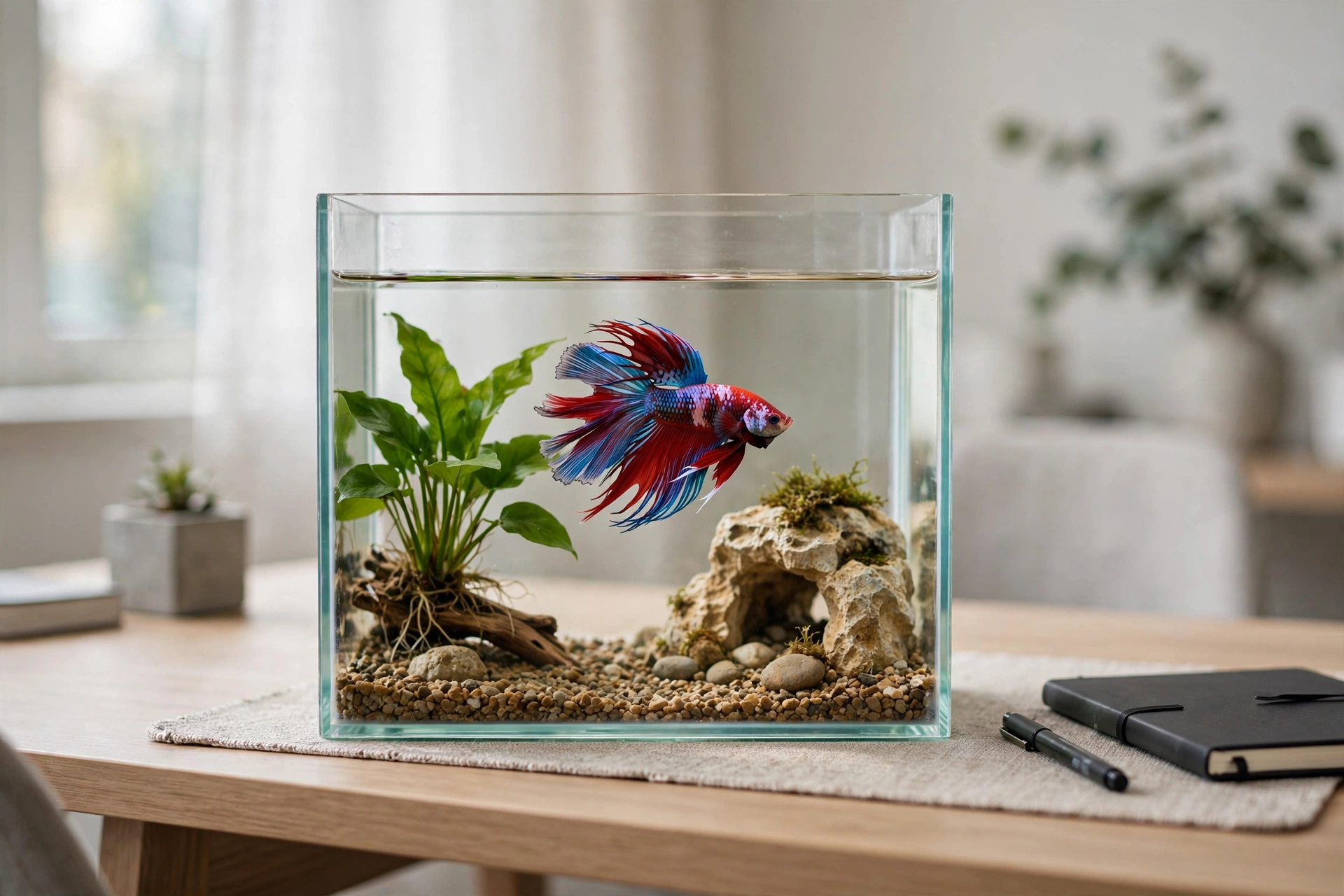
A 5 gallon fish tank is the classic desk aquarium — small enough for a bedroom nightstand, a home office shelf, or a college dorm desk, and cheap enough that most people buy one on impulse at the pet store. Done right, it’s a genuinely great little aquarium. Done wrong, it becomes a very expensive bowl of cloudy water.
Here’s the honest part first: a 5 gallon is harder to keep than a 10 gallon. Five gallons of water swing faster — temperature drops quicker, waste builds up quicker, and one missed water change matters more. But it’s absolutely keepable, and for a betta, a small shrimp colony, or a handful of nano fish, five gallons is plenty of room. You just need to respect the limits and stay consistent. This guide covers the whole thing: the right gear, the setup, what can actually live in there, and the routine that keeps small tanks stable.
Why a 5 Gallon Tank Is Worth It (and Its Limits)
The appeal is obvious — it fits where bigger tanks can’t. A filled 5 gallon weighs about 60 pounds, so it goes on a solid desk or a small aquarium stand with zero fuss. It costs less to buy, less to equip, and water changes take five minutes with a kitchen pitcher.
It’s also the sweet spot for a first betta. Bettas are sold in cups at the store, so a 5 gallon is an enormous upgrade for them — filtered, heated, planted, five gallons is basically a betta mansion.
Now the limits, said plainly because the pet store won’t:
It’s not a community tank. A 5 gallon can’t hold a school of tetras plus a bottom-feeder crew plus a centerpiece fish. Pick one idea — a betta, a small group of nano fish, or a shrimp colony — and commit to it. Everything else is wishful thinking that ends with dead fish.
Parameters swing fast. In five gallons, a single overfeeding or a day of direct sun can spike ammonia or temperature fast. This is a tank that rewards routine and punishes neglect. If you travel a lot and forget maintenance, size up to a 10 gallon fish tank — same footprint feel, way more forgiveness.
Stocking mistakes show quickly. Put the wrong fish in a 20 gallon and you’ve got time to notice and fix it. Do it in a 5 gallon and things go sideways within days. Double-check every species before it goes in.
Accept those limits and a 5 gallon is a fantastic little aquarium — low cost, low fuss, and genuinely fun to watch. It’s the perfect size for a kid’s first tank, a dorm room, or your office desk.
5 Gallon Tank Dimensions
The standard 5 gallon measures 16″ × 8″ × 10″ tall — a long, low rectangle that’s actually a good shape for fish. Some kits come as cubes or tall towers; for anything that swims, length beats height, so the classic rectangle is the better pick.
One quirk to know: almost every “5 gallon” kit holds a bit less than 5 gallons once you add substrate and leave air space at the top. Plan your stocking like it’s 4.5 gallons and you’ll stay on the safe side.
Equipment You Need
Don’t let the small size fool you — a 5 gallon needs the same categories of gear as any tank, just smaller:
Filter. Gentle is the whole game here. A small sponge filter run by a quiet air pump is the classic 5 gallon choice: cheap, silent-ish, impossible to hurt a betta’s fins, and the sponge surface grows a huge bacteria colony for its size. A small hang-on-back filter with an adjustable flow works too — just baffle the outflow (a pre-filter sponge on the intake, or a piece of sponge in the outflow) so small fish aren’t fighting a current. Need a specific model? Our guide to the best fish tank filters includes picks that work for nano tanks.
Heater. A 25-watt adjustable heater (roughly 5 watts per gallon). In a 5 gallon, temperature swings are your biggest enemy, so “adjustable” matters more here than anywhere — preset heaters drift, and a few degrees of drift in five gallons is a big deal. A stick-on thermometer on the glass, checked daily, costs almost nothing and tells you the truth.
Light. A small clip-on LED or the hood light that came with the kit is fine for fish and easy plants: Anubias, Java fern, Java moss, and Marimo moss balls all do well under modest light. Keep it on a timer — 6 to 8 hours a day. More light just grows algae, and in a small tank algae gets ugly fast.
Substrate. Sand or fine gravel, 1 to 1.5 inches deep. Sand looks natural and suits bottom-dwellers and shrimp. Inert gravel plus a few root tabs works fine for low-light plants. Avoid the neon-dyed gravel — it looks fun for a week and then you’re stuck with it for years.
Water conditioner. Non-negotiable. Tap water’s chlorine and chloramine kill fish and the beneficial bacteria your filter needs. A small bottle lasts months at this tank size.
Test kit. The liquid API Freshwater Master Test Kit. In a 5 gallon you’re testing more often than with a big tank, and the strips just aren’t reliable enough — the liquid kit is the one experienced keepers actually trust.
Also grab: a mini gravel vacuum (the small one, not the big python — you’d drain the whole tank in ten seconds), a small fish net, a magnetic algae cleaner, and a 1-gallon pitcher or jug used only for the aquarium. Never soap, never chemicals in anything that touches the tank.
How to Set Up a 5 Gallon Fish Tank: Step by Step
1. Pick the spot before anything else. Level, solid, away from windows (sunlight plus small tank equals algae farm and temperature swings) and away from heaters, AC vents, and anything that vibrates. Remember the filled weight — about 60 pounds — and that you’re never moving this thing again.
2. Rinse everything with plain water. Tank, substrate, plants, decorations. No soap. Ever. Soap residue is lethal to fish and almost impossible to fully rinse out.
3. Add substrate and hardscape. Spread 1 to 1.5 inches of substrate, arrange your rocks or driftwood while the tank is empty — you’ll never get it this easy again. Rinse or soak driftwood first so it doesn’t float or tea-stain your water for the first month.
4. Plant it if you’re going planted. Nano tanks look incredible planted — a 5 gallon is the perfect size for your first aquascape. Stick the plants in the substrate now, while there’s no water to fight.
5. Install equipment. Sponge filter in a back corner (hide it behind plants), heater near the filter so the flow spreads the warmth, light on top. Don’t plug anything in yet.
6. Fill slowly. Put a small bowl or your hand on the substrate and pour onto it so you don’t blast your scape apart. Add conditioner to the water as you fill.
7. Power up and watch. Plug in the filter and heater, confirm the filter is actually moving water, and keep an eye on the seams for an hour. Set the heater to your target temperature (bettas: 78-80 F; most tropical nano fish: 74-78 F) and verify with the thermometer, not the dial.
8. Cycle the tank before any fish. This is the step that decides everything. Your filter needs to grow beneficial bacteria that convert toxic ammonia (fish waste) into nitrite, then into much safer nitrate. Without them, fish swim in their own poison.
Do it fishless: add a tiny ammonia source daily (a pinch of fish food works at this scale) and test every day or two. You’ll see ammonia rise and fall, then nitrite rise and fall, then nitrate climb. When a dose of ammonia converts fully to nitrate within 24 hours, you’re cycled. In a 5 gallon this usually takes 2 to 4 weeks. Yes it’s boring. Yes it’s the difference between fish that live for years and fish that die in a week.
9. Add livestock slowly. Start with your first small group, wait a week, test the water, then add the next. A young bacteria colony in five gallons can only handle so much — patience here pays off for the entire life of the tank.
What Can Actually Live in a 5 Gallon Tank? (3 Stocking Plans)
Here are three setups that genuinely work — pick one, don’t mix and match:
1. The solo betta (the best 5 gallon setup there is). One male or female betta, a couple of live plants, and a nerite snail or two for algae. This is the 5 gallon done perfectly — the fish has room to patrol, the bioload is tiny, and a planted betta tank is gorgeous. Feed a proper fish food routine, not the bargain flakes: bettas do best on quality pellets with occasional frozen treats.
2. The nano fish group. 6 chili rasboras or 5-6 ember tetras, plus 5 cherry shrimp and a nerite snail. These are true nano species — adult size under an inch — so a small group fits without crowding. Heavily planted is the way to go here; the plants absorb nitrates and give shy nano fish the cover they need to show their colors.
3. The shrimp colony. 10-15 cherry shrimp (they’ll breed), a nerite snail, and lots of moss and plants. Almost zero bioload, endlessly entertaining to watch, and the lowest-maintenance option in this guide. A planted shrimp tank on a desk is genuinely one of the nicest things in the hobby.
What doesn’t belong in a 5 gallon: goldfish (they grow to a foot and are waste machines), any tetra bigger than an ember, guppies in mixed sexes (you’ll have 30 fry in a month), dwarf gouramis (too territorial for the space), and anything the store employee promises “stays small.” Always look up the adult size yourself.
5 Gallon Maintenance Schedule
Small tanks need small, frequent care. The whole routine takes about 10 minutes:
Twice a week (or weekly at minimum): 20-25% water change with the mini gravel vacuum. In five gallons, nitrates climb faster than you’d expect, so many keepers do two small changes a week instead of one bigger one — smaller swings, happier fish. Treat new water with conditioner and match the temperature before it goes in.
Weekly: Wipe the glass, check the thermometer reading against the heater setting, and watch the filter flow. Glance at your fish while you’re there — clamped fins, gasping, or hiding usually means a water problem, so test immediately.
Monthly: Rinse the sponge filter in old tank water from a water change — never tap water, which kills the bacteria colony you spent weeks growing. Run the full liquid test panel (ammonia, nitrite, nitrate, pH) even when everything looks fine.
Also monthly: Trim the plants. Nano tanks grow in fast, and a jungle chokes out light and flow. A five-minute trim keeps everything balanced.
5 Beginner Mistakes That Kill 5 Gallon Tanks
1. Skipping the cycle. The number one killer, and it kills small tanks fastest. An uncycled 5 gallon can turn lethal within days. Fishless cycle first, fish second, no exceptions.
2. Treating it like a decoration. A 5 gallon looks like furniture, so people treat it like furniture — and forget it for two weeks. Small tanks don’t forgive neglect. The 10-minute routine above is the price of admission.
3. Overstocking on day one. The tank looks empty, so you keep adding “just one more fish.” Every fish adds waste, and five gallons can’t absorb it. Stock to a plan, add slowly, and stop when the plan says stop.
4. Overfeeding. Fish need what they can eat in 2 minutes, once or twice a day. Uneaten food rots into ammonia, and in five gallons there’s nowhere for that ammonia to hide. When in doubt, feed less — a slightly hungry fish is a healthy fish.
5. No lid, no thermometer check. Small tanks evaporate fast and lose heat fast. A lid cuts evaporation and keeps jumpers (bettas jump) inside. And check that thermometer daily — a dead heater in five gallons drops the temperature hours, not days.
FAQs
Is a 5 gallon fish tank good for beginners?
Honestly? A 10 gallon is easier for a total beginner — more water means slower swings and more room for error. But a 5 gallon is absolutely fine if you follow the routine in this guide: cycle it, stock it lightly, and keep up with water changes. For a kid’s first tank or a single betta, it’s ideal.
How many fish can I put in a 5 gallon tank?
One betta, or 5-6 true nano fish (chili rasboras, ember tetras), or a shrimp colony — pick one setup, not all three. The old “one inch per gallon” rule breaks down at this size; behavior and bioload matter more than length. When in doubt, understock.
Do I need a filter and heater for a 5 gallon?
Yes to both. A filter holds the bacteria colony that keeps the water safe, and a heater keeps tropical fish at stable temperatures — room temperature swings too much for most tropical species, especially in five gallons. Skip neither.
How often should I change the water in a 5 gallon tank?
20-25% once a week at minimum; many keepers do two small changes a week for extra stability. Small, frequent changes beat one big monthly change every time.
Can a betta live happily in a 5 gallon tank?
Yes — five gallons is an excellent home for a single betta. Heated, filtered, and planted, it’s a huge step up from the cups they’re sold in. Add a snail or two for company (bettas don’t get lonely, but snails clean algae) and you’re set.
Can I put a goldfish in a 5 gallon tank?
No. Goldfish grow to 8-12 inches and produce enormous amounts of waste — a 5 gallon becomes toxic within days and stunts their growth. Even one goldfish needs 20+ gallons. If you want goldfish, that’s a different tank; if you want a 5 gallon, pick from the stocking plans above.

3 Comments
Pingback: 10 Gallon Fish Tank: The Complete Setup, Stocking & Care Guide
Pingback: 30 Gallon Fish Tank: The Complete Setup, Stocking & Care Guide
Pingback: Small Fish Tank: The Complete Setup, Stocking & Care Guide