
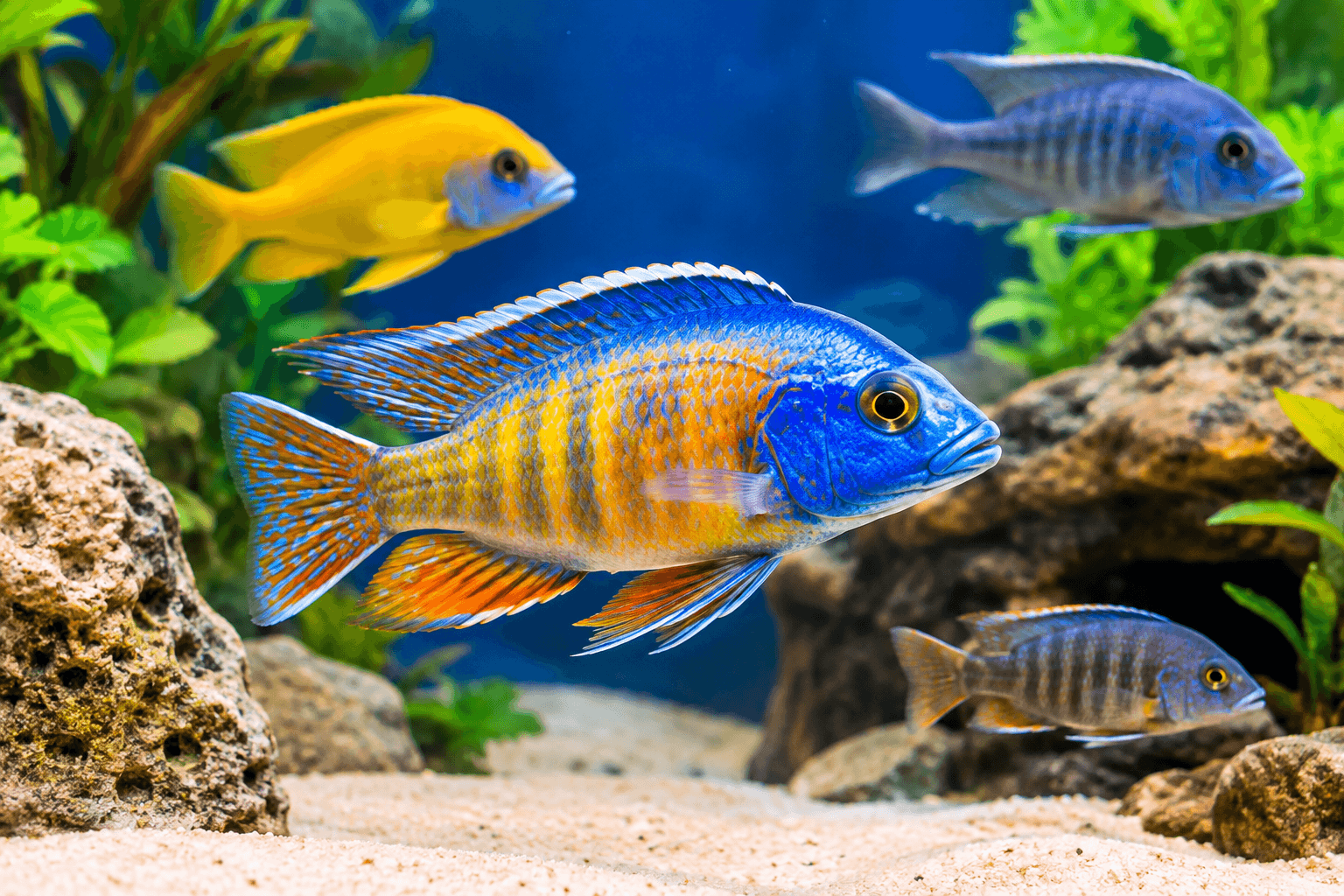
The peacock fish, commonly called the peacock cichlid, is one of the most colorful freshwater fish you can keep. With bright blue, yellow, orange, and red colors, it can become the centerpiece of an aquarium.
Peacock cichlids belong to the Aulonocara group and are native to Lake Malawi in East Africa. They are generally less aggressive than many other African cichlids, but they still need the right tank size, water conditions, diet, and tank mates.
What Is a Peacock Fish?
A peacock fish is an African cichlid from the Aulonocara group. In the wild, these fish live around sandy and rocky areas of Lake Malawi.
One interesting behavior is sand-sifting. Peacock cichlids search through sand for tiny organisms and food, which is why a sandy substrate works well in their aquarium.
Male and female peacock fish also look different. Mature males usually develop much brighter colors, while females are often silver, gray, or brown.
Peacock Fish Quick Facts
| Feature | General Information |
|---|---|
| Common name | Peacock Cichlid |
| Scientific group | Aulonocara |
| Origin | Lake Malawi, East Africa |
| Adult size | About 5–6 inches |
| Temperature | 76–82°F |
| pH | About 7.8–8.5 |
| Water | Hard and alkaline |
| Diet | Quality cichlid foods and suitable frozen foods |
| Temperament | Relatively peaceful for a Malawi cichlid |
| Breeding | Maternal mouthbrooder |
Exact requirements can vary between species and aquarium strains.
How Big Do Peacock Fish Get?
Most peacock cichlids reach around 5–6 inches as adults, although size can vary by species.
Their growth depends on genetics, food, water quality, tank space, and general care. Remember that a small juvenile will need much more space as it becomes an adult.
How Long Do Peacock Fish Live?
With good care, peacock cichlids can live for several years. Many aquarium guides report a lifespan of around 6–8 years, although individual fish can vary.
Good water quality, proper feeding, low stress, and suitable tank mates can help support a longer and healthier life.
What Size Tank Does a Peacock Fish Need?
A 55-gallon aquarium is commonly recommended as a starting point for peacock cichlids. A larger 75-gallon tank can provide more swimming space and make it easier to manage a group.
Tank size should depend on:
- Number of fish
- Male-to-female ratio
- Other fish in the aquarium
- Adult size of the species
- Available swimming space
If you plan to keep a group, especially one male with several females, a larger aquarium is usually the better option.
Peacock Fish Water Parameters
Peacock fish come from Lake Malawi and prefer warm, hard, alkaline water.
A useful general range is:
- Temperature: 76–82°F
- pH: 7.8–8.5
- Hardness: Moderate to high
- Ammonia: 0 ppm
- Nitrite: 0 ppm
Stable water is more important than constantly trying to reach one exact number. Test the aquarium regularly and perform appropriate partial water changes to keep conditions stable.
How to Set Up a Peacock Fish Tank
A good peacock cichlid tank should have open swimming space, sand, rocks, and hiding areas.
Use Sand
Sand is a great substrate because peacock cichlids naturally sift through it while searching for food.
Leave some open sandy areas instead of covering the entire aquarium with rocks.
Add Rocks and Hiding Places
Rocks can provide:
- Hiding places
- Visual barriers
- Resting areas
- Territory boundaries
Don’t overcrowd the aquarium with rocks. Peacock fish also need open areas for swimming.
Use Good Filtration
A good filter is important because African cichlids need clean, well-oxygenated water. Choose filtration according to the aquarium size and number of fish.
What Do Peacock Fish Eat?
Peacock cichlids naturally search sandy areas for small organisms. In an aquarium, give them a varied and quality diet.
Suitable foods can include:
- Quality cichlid pellets
- Cichlid flakes
- Frozen brine shrimp
- Frozen mysis shrimp
- Other suitable frozen foods
Feed reasonable portions rather than large amounts. Overfeeding can increase waste and damage water quality.
Are Peacock Fish Aggressive?
Peacock cichlids are generally less aggressive than many other Malawi cichlids, but they are still territorial fish.
Males can become aggressive toward other males, especially when the tank is too small or there are not enough hiding places.
A common setup is one male with several females. This can help reduce excessive attention on a single female.
Best Tank Mates for Peacock Fish
Choosing the right tank mates is very important.
Possible companions include:
- Compatible peacock cichlids
- Peaceful Lake Malawi Haps
- Suitable Synodontis catfish
Be careful with highly aggressive fish. Mbuna, in particular, can create problems because some species are much more aggressive and territorial.
Before adding any fish, compare its adult size, temperament, diet, and water requirements with your peacock cichlids.
Male vs. Female Peacock Fish
Male and female peacock fish can look very different.
Male:
- Brighter colors
- Blue, yellow, orange, or red patterns
- More colorful when mature
- More likely to defend territory
Female:
- Usually less colorful
- Often silver, gray, or brown
- More muted body pattern
- Can experience stress from repeated male attention
Color alone is not always a perfect way to identify sex because different species and captive-bred varieties can look different.
Popular Peacock Fish Types
You may see several varieties and names in the aquarium trade, including:
- Sunshine Peacock
- OB Peacock
- Dragon Blood Peacock
- German Red Peacock
- Eureka Red
- Blue Peacock varieties
- Benga Peacock
Not every colorful “peacock” is a pure wild species. Some aquarium varieties have been selectively bred or hybridized. OB Peacock, for example, is an aquarium hybrid rather than a naturally occurring wild Aulonocara species.
How Do Peacock Fish Breed?
Peacock cichlids are maternal mouthbrooders.
During breeding, the male displays to the female. After spawning, the female collects the eggs and carries them in her mouth.
She protects the developing eggs and fry until they are ready to be released. The brooding period is commonly around 3–4 weeks.
A calm environment and suitable hiding areas can help reduce stress during this period.
Common Peacock Fish Problems
Problems are often linked to poor water quality, overcrowding, stress, unsuitable tank mates, or poor diet.
Watch for:
- Loss of color
- Constant hiding
- Refusing food
- Rapid breathing
- Torn fins
- Unusual swimming
- Swollen abdomen
- Excessive aggression
If your fish suddenly changes its behavior, check water parameters and tank conditions first.
How to Keep Peacock Fish Colorful
Good coloration starts with good overall care.
To support healthy color:
- Keep water parameters stable.
- Provide enough swimming space.
- Feed a quality, varied diet.
- Avoid aggressive tank mates.
- Keep the aquarium clean.
- Give males enough territory.
- Avoid overcrowding.
Color-enhancing food alone cannot replace proper water, diet, space, and low-stress conditions.
Final Thoughts
Peacock fish are beautiful and fascinating African cichlids. Their bright colors, sand-sifting behavior, and interesting breeding habits make them rewarding aquarium fish.
The basics are simple: provide warm, hard, alkaline water, sandy substrate, good filtration, enough space, quality food, and compatible tank mates.
When these needs are met, peacock cichlids can stay healthy, active, and beautifully colored for years.
Frequently Asked Questions
Are peacock fish freshwater fish?
Yes. Peacock cichlids are freshwater fish native to Lake Malawi in East Africa.
Are peacock cichlids good for beginners?
They can be suitable for beginners who understand African cichlid water requirements, tank size, and compatibility.
Do peacock fish need sand?
Sand is recommended because these fish naturally sift through sandy areas while searching for food.
Can peacock cichlids live with Mbuna?
Some combinations may work, but aggressive Mbuna can stress or injure peacock cichlids. Compatibility depends on the species, temperament, tank size, and stocking plan.
How many peacock cichlids should be kept together?
A common arrangement is one male with several females. The appropriate number depends on the aquarium size and species.
Why is my peacock fish losing color?
Stress, poor water quality, aggression, maturity, and diet can all affect coloration. Check water parameters and tank-mate behavior if color changes suddenly.
